
Most ACL reconstructions restore the knee’s front-to-back stability. The harder problem is rotation. In a young athlete with a high-grade pivot shift, knee hyperextension, and a plan to return to cutting and pivoting sports, an isolated ACL graft carries a meaningful risk of stretching out or tearing again. Lateral extra-articular tenodesis (LET) is a short add-on procedure that uses a strip of the patient’s own iliotibial band to give the outside of the knee a second rotational restraint and to share load with the ACL graft.
In the video below, Dr. Jeremy Burnham, an orthopedic sports medicine surgeon at Ochsner-Andrews Sports Medicine Institute in Baton Rouge, Louisiana, walks through why he adds LET in selected patients, how the 2025 international consensus and the STABILITY randomized trial guide patient selection, and how he performs his modified Lemaire technique. The case is a 14-year-old soccer player with recurrent instability who underwent quadriceps tendon autograft ACL reconstruction, lateral meniscus repair, and LET. This article summarizes the evidence behind each decision in the video and links every number to its source.
📋 In This Article
- What Is a Lateral Extra-Articular Tenodesis?
- Watch: LET During ACL Reconstruction (Surgical Technique Video)
- Why the Anterolateral Complex Matters for Rotational Stability
- Who Benefits From LET? The 2025 LEAP Consensus
- What the STABILITY Trial Showed
- The Case: A 14-Year-Old Soccer Player
- How Dr. Burnham Performs the Modified Lemaire LET
- Femoral Fixation Point, Knee Flexion Angle, and Tension
- Potential Disadvantages and How They Are Managed
- Beyond STABILITY: Cost, Tibial Slope, and STABILITY 2
- The Bottom Line
- References
- Frequently Asked Questions
What Is a Lateral Extra-Articular Tenodesis?
A lateral extra-articular tenodesis is performed on the outside of the knee, outside the joint itself, during an ACL reconstruction. The surgeon harvests a strip of the iliotibial band roughly 1 centimeter wide and 8 to 10 centimeters long, leaves it attached at its natural insertion on Gerdy’s tubercle, passes it underneath the lateral collateral ligament, and anchors it to the femur just behind and above the lateral epicondyle. The result is a tether that resists excessive internal rotation of the tibia, which is the motion that produces the pivot shift.
LET belongs to a family of procedures called lateral extra-articular procedures (LEAPs). The other common option is anterolateral ligament (ALL) reconstruction. In a 2025 survey of 48 high-volume knee surgeons at the Freddie Fu Panther Sports Medicine Symposium, to which Dr. Burnham contributed as a member of the Panther ACL Treatment Group, 87% of surgeons who perform anterolateral augmentation used LET exclusively, 4% used ALL reconstruction exclusively, and 9% used both (Giusto, Burnham, et al., J ISAKOS 2025). The procedure adds one additional incision and a modest amount of operating time to a standard ACL reconstruction.
Watch: LET During ACL Reconstruction (Surgical Technique Video)
The video runs just under 11 minutes. The first half covers anatomy, patient selection, and the evidence; the second half is the surgical technique in the operating room, followed by pearls and takeaways. Surgical footage is shown.
Chapters in the video: anterolateral anatomy (0:22), the LEAP consensus on patient selection (1:06), STABILITY trial results (2:14), the modified Lemaire technique and femoral fixation point (3:15), knee flexion angle at fixation (4:04), potential disadvantages (4:31), the case presentation (4:57), the surgical technique (5:42 to 8:52), pearls (9:01), and the newer cost-effectiveness and tibial slope data (9:54).
Why the Anterolateral Complex Matters for Rotational Stability
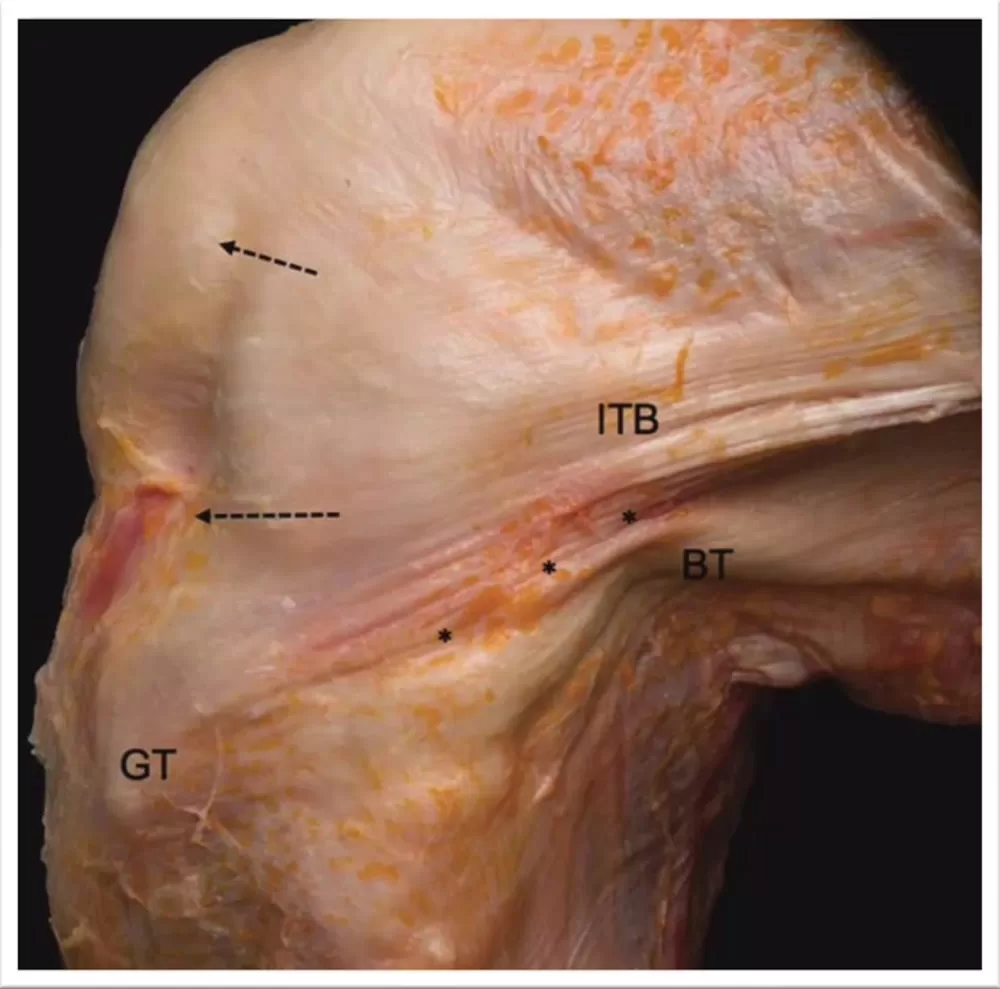
The ACL does not control tibial rotation alone. It works together with the anterolateral complex, a layered set of structures on the outside of the knee that includes the superficial and deep iliotibial band, the Kaplan fibers that anchor the iliotibial band to the distal femur, the capsulo-osseous layer, and the anterolateral capsule. Dr. Burnham co-authored the layer-by-layer anatomic study that defined this complex during his fellowship at the University of Pittsburgh Medical Center. In 20 fresh-frozen cadaveric knees, the research team found that the iliotibial band between the Kaplan fibers and its tibial insertion functions as a single unit, and that a discrete “anterolateral ligament” was not observed as a separate structure (Herbst, Albers, Burnham, et al., OJSM 2017). A companion pictorial essay in KSSTA illustrates each layer (Herbst, Burnham, et al., KSSTA 2017), and a JAAOS review summarizes the clinical implications (Musahl, Herbst, Burnham, Fu, JAAOS 2018).
Injury to these structures is common alongside an ACL tear, and when it goes unaddressed the knee can remain rotationally loose even with a well-placed ACL graft. Clinically, that laxity is detected with the pivot-shift examination, which is the single most important test in deciding whether a lateral procedure should be added. Dr. Burnham’s earlier article on rotatory knee instability and what standard ACL tests miss covers the examination in more depth.
Biomechanically, the benefit of LET is load sharing. In a cadaveric model of combined ACL and anterolateral injury, adding a modified Lemaire LET to ACL reconstruction reduced the force on the ACL graft by up to 61% between 0 and 60 degrees of flexion under internal tibial torque (Mayr et al., J Exp Orthop 2022). A graft that sees less rotational load is a graft that is less likely to stretch or fail while it heals.
Who Benefits From LET? The 2025 LEAP Consensus
In 2025, 55 knee surgeons from 17 countries completed a three-round Delphi process on when a lateral extra-articular procedure should accompany ACL reconstruction, published in two parts in Arthroscopy. The patient-selection statement (Sonnery-Cottet et al., Part I, Arthroscopy 2025) reached unanimous agreement on one indication: active patients 25 years old or younger receiving a hamstring autograft ACL reconstruction. Strong consensus (90% or more of the panel) supported adding a LEAP for:
- A grade 3 pivot shift (97.9% agreement)
- Knee hyperextension (97.9%)
- Multiple relative risk factors present in the same patient (97.1%)
- Return to pivoting sports (93.2%)
- Revision ACL reconstruction (91.5%)
- Active patients 25 or younger receiving a non-hamstring graft such as patellar or quadriceps tendon (90.7%)
- A grade 3 Lachman test (90%)
Consensus at a lower threshold (75% to 89.9%) favored a LEAP for chronic symptomatic ACL deficiency, posterior tibial slope greater than 12 degrees, a history of contralateral ACL injury, and skeletally immature patients. The panel did not reach consensus on small-diameter grafts, female athletes as a group, imaging signs of anterolateral injury such as a Segond fracture, or concomitant meniscal procedures. The companion technique statement (Sonnery-Cottet et al., Part II, Arthroscopy 2025) agreed unanimously that an iliotibial band graft should pass beneath the lateral collateral ligament, that no single LEAP has proven clinically superior to another, that modern LEAPs carry a low complication rate and do not increase lateral compartment osteoarthritis risk, and that adding a LEAP does not require changes to rehabilitation or return-to-play timelines.
The Panther survey that Dr. Burnham contributed to points the same direction. High-grade pivot shift was ranked among the top three indications by 91% of respondents, and surgeons reported adding LET in 68% of first-time revision reconstructions and 84% of multiple-revision cases, compared with roughly a third of primary reconstructions regardless of graft type (Giusto, Burnham, et al., J ISAKOS 2025). More on that study is in the Freddie Fu Symposium research update.
What the STABILITY Trial Showed
The strongest randomized evidence for LET comes from the STABILITY trial, a multicenter randomized clinical trial of 618 patients aged 25 or younger undergoing hamstring autograft ACL reconstruction with or without LET (Getgood et al., Am J Sports Med 2020). Patients had to meet at least two of three high-risk criteria: a grade 2 or greater pivot shift, a plan to return to pivoting sports, or generalized ligamentous laxity. At two years:
- Graft rupture occurred in 34 of 298 patients (11%) with isolated ACL reconstruction versus 11 of 291 (4%) when LET was added, a 67% relative risk reduction.
- Clinical failure, a composite of graft rupture or persistent rotatory laxity on examination, fell from 120 of 298 (40%) to 72 of 291 (25%), a 38% relative risk reduction.
- The number needed to treat with LET to prevent one graft rupture over two years was 14.3.
- Patients in the LET group reported more pain at 3 months, with the difference in KOOS pain persisting to 6 months. There were no clinically important differences in patient-reported outcomes at later time points, and sports activity level at two years was similar between groups.
Two cautions apply when translating these results. STABILITY studied hamstring autografts in a high-risk population, so the magnitude of benefit with patellar or quadriceps tendon grafts, or in lower-risk patients, is not yet established by randomized data. That gap is exactly what STABILITY 2 is designed to close, as discussed below.
The Case: A 14-Year-Old Soccer Player
The patient in the video is a 14-year-old female soccer player with recurrent instability of the left knee and a goal of returning to soccer. Examination under anesthesia showed a grade 2B Lachman, a 2+ pivot shift, and 15 degrees of knee hyperextension. She underwent anatomic ACL reconstruction with a quadriceps tendon autograft and repair of an associated lateral meniscus tear.
Measured against the consensus criteria above, she carried several independent risk factors at once: young age, a pivoting sport, a high-grade pivot shift, and substantial hyperextension. Any one of these would prompt a discussion about augmentation; the combination is the clearest indication the consensus panel identified. Dr. Burnham therefore added a modified Lemaire LET to the reconstruction.
How Dr. Burnham Performs the Modified Lemaire LET
Dr. Burnham’s technique follows the modified Lemaire approach and is designed to integrate with the femoral fixation of the ACL graft rather than compete with it. The steps shown in the video are:
- Lateral incision centered over the lateral femoral epicondyle, with exposure of the iliotibial band.
- Graft harvest. A strip of iliotibial band about 1 centimeter wide and 10 centimeters long is developed with a scalpel along the direction of the fibers. The distal attachment at Gerdy’s tubercle is preserved, the strip is released proximally, and enough surrounding iliotibial band is left for closure.
- Whipstitch of the free proximal end for control during passage and to reinforce the segment used for fixation.
- Passage deep to the lateral collateral ligament while staying superficial to the joint capsule. The graft is checked to confirm it lies smoothly without twisting.
- ACL graft first. The ACL graft is passed and secured with an Arthrex FiberTag SoftButton femoral fixation construct, and a Knee FiberTak anchor is placed on the lateral femoral condyle with care not to disrupt the ACL femoral tunnel.
- LET femoral fixation proximal and posterior to the lateral epicondyle, using the sutures associated with the ACL femoral fixation construct in a loop-and-tack configuration.
- Tensioning with the knee at 30 degrees of flexion and the tibia in neutral rotation, taking up slack under controlled tension and avoiding over-tightening. The ACL graft is tensioned before the LET.
- Closure of the remaining iliotibial band over the harvest site without excessive tension across the repair.

Dr. Burnham and his research team have presented this integrated loop-and-tack approach, which pairs cortical button ACL fixation with knotless LET fixation, at national meetings including the AAOS 2026 Orthopaedic Video Theater. Using the same suture construct for both the ACL and the LET avoids a second femoral tunnel and reduces the chance of hardware conflict on the lateral femur.
Femoral Fixation Point, Knee Flexion Angle, and Tension
Three technical variables determine whether an LET adds rotational restraint without over-constraining the knee.
Femoral fixation point. The consensus recommendation, and Dr. Burnham’s practice, is to fix the graft proximal and posterior to the lateral epicondyle with the graft routed beneath the lateral collateral ligament. Biomechanical work shows this choice is not trivial. In a six-specimen cadaveric study, the originally described Lemaire insertion point (4 millimeters posterior and 8 millimeters proximal to the epicondyle) reduced internal tibial rotation below native values at every flexion angle tested, while shifting the insertion 5 millimeters anterior and 5 millimeters proximal restored native rotation at 0, 30, and 60 degrees and reduced over-constraint at the low flexion angles (Sigloch et al., Arthroscopy 2025). The practical lesson is that fixation location and graft path must be planned together, and that tension matters as much as position.
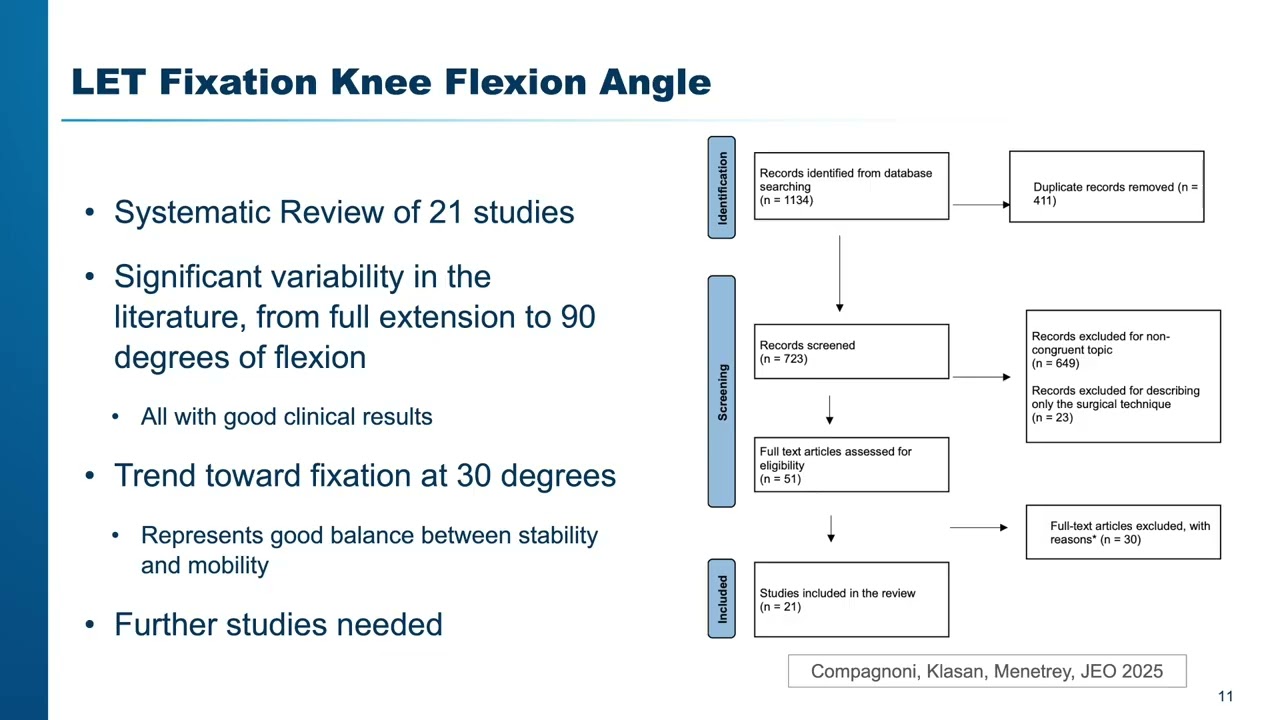
Knee flexion angle. Published techniques fix the graft anywhere from full extension to 90 degrees. A 2025 systematic review of 21 clinical studies found that 30 degrees was the most commonly reported angle (10 studies), with others fixing at 45, 60, or 90 degrees, and that good clinical results were reported across this range without a proven optimum (Compagnoni et al., J Exp Orthop 2025). Dr. Burnham fixes at 30 degrees with the tibia in neutral rotation, which the consensus panel’s recommended window of 0 to 60 degrees under low tension comfortably includes.
Tension and sequence. The LET is a secondary restraint and is tensioned as one: slack is removed, but the graft is not pulled tight. Tensioning the ACL graft first, then the LET, prevents the lateral tether from locking the tibia into external rotation before the primary stabilizer is set. Knee motion and fixation security are checked before closure.
Potential Disadvantages and How They Are Managed
LET is not a free addition. It requires a second incision and an iliotibial band harvest, it adds operative time, and some patients notice lateral soreness or irritation at the fixation site during recovery. In STABILITY, the LET group reported more pain at 3 months, a difference that had resolved by later follow-up (Getgood et al., AJSM 2020). The two technical concerns are over-constraint of internal rotation, which could in theory increase lateral compartment load, and interference with the ACL femoral tunnel or fixation.
Each of these has a mitigation that appears in the technique above: preserve enough iliotibial band for a tension-free closure, place the lateral anchor away from the ACL tunnel, fix at a moderate flexion angle in neutral rotation, and tension the LET only after the ACL graft is secured. On the question of long-term arthritis, the 2025 consensus panel agreed unanimously that modern LEAPs do not increase the risk of lateral compartment osteoarthritis, while acknowledging that long-term follow-up continues to accumulate (Sonnery-Cottet et al., Part II, Arthroscopy 2025). STABILITY 2 is tracking lateral compartment joint space and cartilage MRI for this reason.
Beyond STABILITY: Cost, Tibial Slope, and STABILITY 2
Cost-effectiveness. A 2025 Markov decision analysis pooled randomized trials totaling 1,072 patients and found a graft failure rate of 5.1% with ACL reconstruction plus LET versus 11.2% with reconstruction alone. Over a five-year horizon, the modeled total cost was $56,217 for reconstruction with LET versus $68,605 for reconstruction alone, because avoided revisions more than paid for the added procedure, and LET was the preferred strategy in 98.1% of simulations (Varady et al., Arthroscopy 2025). In sensitivity analyses, LET remained cost-effective until the failure rate with LET rose above 11.3% or the failure rate without it fell below 4.8%, which suggests the economic case may extend beyond the very highest-risk athletes.
Posterior tibial slope. A steep posterior tibial slope increases ACL graft force and failure risk. In an eight-specimen cadaveric study, LET reduced ACL graft loads by 22.1% at 10 degrees of slope and 36.6% at 20 degrees under a simulated pivot shift, compared with 2.6% and 23.9% for a 10-degree slope-reducing osteotomy, with no significant difference between the two strategies (Lemme et al., Am J Sports Med 2025). This is a laboratory finding, not a clinical outcome. It supports LET as a graft-protective measure when slope is elevated, but it does not establish that LET replaces a slope-correcting osteotomy in a patient who otherwise needs one.
STABILITY 2. The open question after STABILITY is whether LET delivers the same protection with patellar tendon and quadriceps tendon autografts, which are now the most common grafts in young athletes. STABILITY 2 (NCT03935750), funded by the National Institute of Arthritis and Musculoskeletal and Skin Diseases and the Canadian Institutes of Health Research and led from the University of Pittsburgh, has randomized 1,272 high-risk patients aged 14 to 25 to bone-patellar tendon-bone or quadriceps tendon autograft with or without LET, with primary completion expected in 2028. Dr. Burnham serves as the site principal investigator for STABILITY 2 at Ochsner in Baton Rouge, one of 31 sites across North America and Europe. Until those results are available, the decision to add LET to a quadriceps tendon reconstruction, as in the case shown here, rests on the consensus criteria and on the biomechanical rationale rather than on graft-specific randomized data.
About the Author
Jeremy M. Burnham, MD is a board-certified orthopedic surgeon and Director of Sports Medicine at Ochsner-Andrews Sports Medicine Institute in Baton Rouge, Louisiana, with a clinical focus on ACL reconstruction and complex knee instability. Following his orthopedic surgery residency at the University of Kentucky, he completed his sports medicine fellowship at the University of Pittsburgh Medical Center (UPMC), where he trained under the late Dr. Freddie Fu, a pioneer of anatomic ACL reconstruction, Dr. James Bradley, a renowned sports medicine surgeon and longtime professional team orthopedist, and Dr. Volker Musahl, an internationally recognized ACL surgeon and researcher. His team physician experience spans professional sports teams, the University of Pittsburgh, and Southern University. With more than 145 peer-reviewed publications, book chapters, and scientific presentations, Dr. Burnham is the most published ACL surgeon in Louisiana. His research focuses on advancing ACL reconstruction, optimizing return-to-sport outcomes, and pioneering injury prevention, and has been recognized with the Game Changer Award from the Arthritis Foundation and the Playmaker Award from AOSSM. He serves as a site principal investigator for two federally funded clinical trials (NIH STABILITY 2 and Department of Defense STaR Trial). View full credentials and publications.
The Bottom Line
Lateral extra-articular tenodesis is a well-supported augmentation for selected patients undergoing ACL reconstruction, not a routine addition for everyone. The best randomized evidence, from the STABILITY trial, shows that in young, high-risk patients with hamstring autografts it cut graft rupture from 11% to 4% and clinical failure from 40% to 25% at two years. International consensus now identifies the patients most likely to benefit: young active athletes, those with a high-grade pivot shift or Lachman, knee hyperextension, revision surgery, and a planned return to pivoting sports. Economic modeling suggests that preventing those failures lowers total cost over five years.
Execution matters as much as selection. Passing the graft deep to the lateral collateral ligament, fixing it proximal and posterior to the lateral epicondyle, tensioning the ACL graft first, and securing the LET at a moderate flexion angle in neutral rotation under controlled tension are the steps that preserve motion while adding rotational restraint. For patients in Baton Rouge and across Louisiana weighing ACL surgery, the right question to ask a surgeon is not whether LET is always done, but how the decision is made for each knee. Dr. Burnham’s guide to choosing an ACL surgeon covers the other questions worth asking.
References
- Getgood AMJ, Bryant DM, Litchfield R, et al; STABILITY Study Group. Lateral Extra-articular Tenodesis Reduces Failure of Hamstring Tendon Autograft Anterior Cruciate Ligament Reconstruction: 2-Year Outcomes From the STABILITY Study Randomized Clinical Trial. Am J Sports Med. 2020;48(2):285-297. PubMed
- Sonnery-Cottet B, Carrozzo A, Saithna A, et al. Indications for Lateral Extra-articular Procedures in the Anterior Cruciate Ligament-Reconstructed Knee: Part I of an International Consensus Statement. Arthroscopy. 2025;41(9):3303-3312. PubMed
- Sonnery-Cottet B, Carrozzo A, Saithna A, et al. Surgical Treatment and Complications of Lateral Extra-articular Procedures in the Anterior Cruciate Ligament-Reconstructed Knee: Part II of an International Consensus Statement. Arthroscopy. 2025;41(9):3313-3321. PubMed
- Giusto JD, Burnham JM (Panther ACL Treatment Group), Konstantinou E, Rabuck SJ, Lesniak BP, Hughes JD, Irrgang JJ, Musahl V. When is anterolateral complex augmentation indicated? Perspectives from the 2024 Freddie Fu Panther Sports Medicine Symposium. J ISAKOS. 2025;11:100393. PubMed
- Herbst E, Albers M, Burnham JM, Fu FH, Musahl V. The Anterolateral Complex of the Knee. Orthop J Sports Med. 2017;5(10):2325967117730805. PubMed
- Herbst E, Albers M, Burnham JM, Shaikh HS, Naendrup JH, Fu FH, Musahl V. The anterolateral complex of the knee: a pictorial essay. Knee Surg Sports Traumatol Arthrosc. 2017;25(4):1009-1014. PubMed
- Musahl V, Herbst E, Burnham JM, Fu FH. The Anterolateral Complex and Anterolateral Ligament of the Knee. J Am Acad Orthop Surg. 2018;26(8):261-267. PubMed
- Mayr R, Sigloch M, Coppola C, Hoermann R, Iltchev A, Schmoelz W. Modified Lemaire tenodesis reduces anterior cruciate ligament graft forces during internal tibial torque loading. J Exp Orthop. 2022;9(1):45. PubMed
- Sigloch M, Coppola C, Hoermann R, Alt P, Schmoelz W, Mayr R. Overconstraint Associated With a Modified Lemaire Lateral Extra-Articular Tenodesis Is Decreased by Using an Anterior Femoral Insertion Point in a Cadaveric Model. Arthroscopy. 2025;41(6):1947-1956.e1. PubMed
- Compagnoni R, Klasan A, Grassi A, Puglia F, Zaffagnini S, Randelli PS, Menetrey J. Optimal flexion angle for graft fixation in lateral extra-articular tenodesis combined with anterior cruciate ligament reconstruction: A systematic review. J Exp Orthop. 2025;12(3):e70312. PubMed
- Varady NH, Oeding JF, Inclan PM, Ranawat AS, Strickland SM, Pearle AD, Rodeo SA, Williams RJ. Adding a Lateral Extra-articular Tenodesis Is Cost-Effective in Primary Anterior Cruciate Ligament Reconstruction: A Markov Analysis. Arthroscopy. 2025;41(11):4772-4785.e3. PubMed
- Lemme NJ, Badida R, Molino J, Quinn M, Hague M, Fleming BC, Owens BD. The Effect of Lateral Extra-articular Tenodesis on Anterior Cruciate Ligament Graft Forces and Knee Stability Compared With Slope Reduction Osteotomy in the Setting of Increased Posterior Tibial Slope. Am J Sports Med. 2025;53(8):1912-1920. PubMed
- University of Pittsburgh. Anterior Cruciate Ligament Reconstruction Using Bone Patellar Bone or Quad Tendon Autograft With or Without Lateral Extra-Articular Tenodesis in Individuals Who Are at High Risk of Graft Failure (STABILITY 2). ClinicalTrials.gov identifier NCT03935750. Accessed November 8, 2026.
Frequently Asked Questions
What is a lateral extra-articular tenodesis (LET)?
LET is an add-on procedure performed during ACL reconstruction. The surgeon takes a thin strip of the iliotibial band on the outside of the knee, leaves it attached at the shin bone, passes it under the lateral collateral ligament, and anchors it to the thigh bone just behind the outer knuckle of the femur. It acts as a second restraint against the rotational slipping (the pivot shift) that a torn ACL allows, and it shares load with the new ACL graft while the graft heals.
Who should consider adding LET to ACL surgery?
A 2025 international consensus of 55 knee surgeons recommended LET or a similar lateral procedure most strongly for active patients 25 or younger with a hamstring graft, and with strong agreement for a high-grade pivot shift, knee hyperextension, return to pivoting sports, revision ACL surgery, and young patients with patellar or quadriceps tendon grafts. Patients with several of these factors at once are the clearest candidates. Dr. Burnham makes the decision individually based on the examination under anesthesia, the sport, age, graft choice, and knee alignment.
Does LET make ACL recovery longer or more painful?
The consensus panel agreed that adding a lateral procedure does not require changes to rehabilitation or return-to-play timelines. In the STABILITY trial, patients who had LET reported somewhat more pain in the first 3 months, and that difference had resolved by later follow-up. Most patients notice an extra incision on the outside of the knee and some temporary lateral soreness, but the rehabilitation protocol itself is the same as for ACL reconstruction alone.
Does LET cause arthritis on the outside of the knee?
Older lateral procedures from decades ago raised this concern, in part because they were done without a modern ACL reconstruction and were often over-tightened. The 2025 international consensus panel agreed unanimously that modern lateral extra-articular procedures do not increase the risk of lateral compartment osteoarthritis. Careful technique, including tensioning the graft at a moderate flexion angle in neutral rotation and tensioning the ACL graft first, is how surgeons avoid over-constraining the knee. STABILITY 2, the ongoing trial in which Dr. Burnham is a site investigator, is tracking lateral compartment joint space and cartilage MRI specifically to answer this question with long-term data.
Is LET the same as an anterolateral ligament (ALL) reconstruction?
No. Both are lateral extra-articular procedures that add rotational restraint, but LET uses the patient’s own iliotibial band left attached at the shin, while ALL reconstruction uses a separate tendon graft fixed with tunnels on both bones. In a 2025 survey of high-volume knee surgeons, 87% used LET exclusively and 4% used ALL reconstruction exclusively. The consensus panel concluded that no single lateral procedure has proven clinically superior to another, so the choice often comes down to surgeon experience and how the procedure integrates with the ACL fixation.