
Every month, 59,000 people search “creatine side effects” online. The large majority of those searches are driven by two concerns: kidney damage and hair loss. Both fears trace to misread science and supplement industry mythology rather than peer-reviewed clinical evidence, and the gap between what the research actually shows and what the public believes represents one of the most persistent misconceptions in sports nutrition.
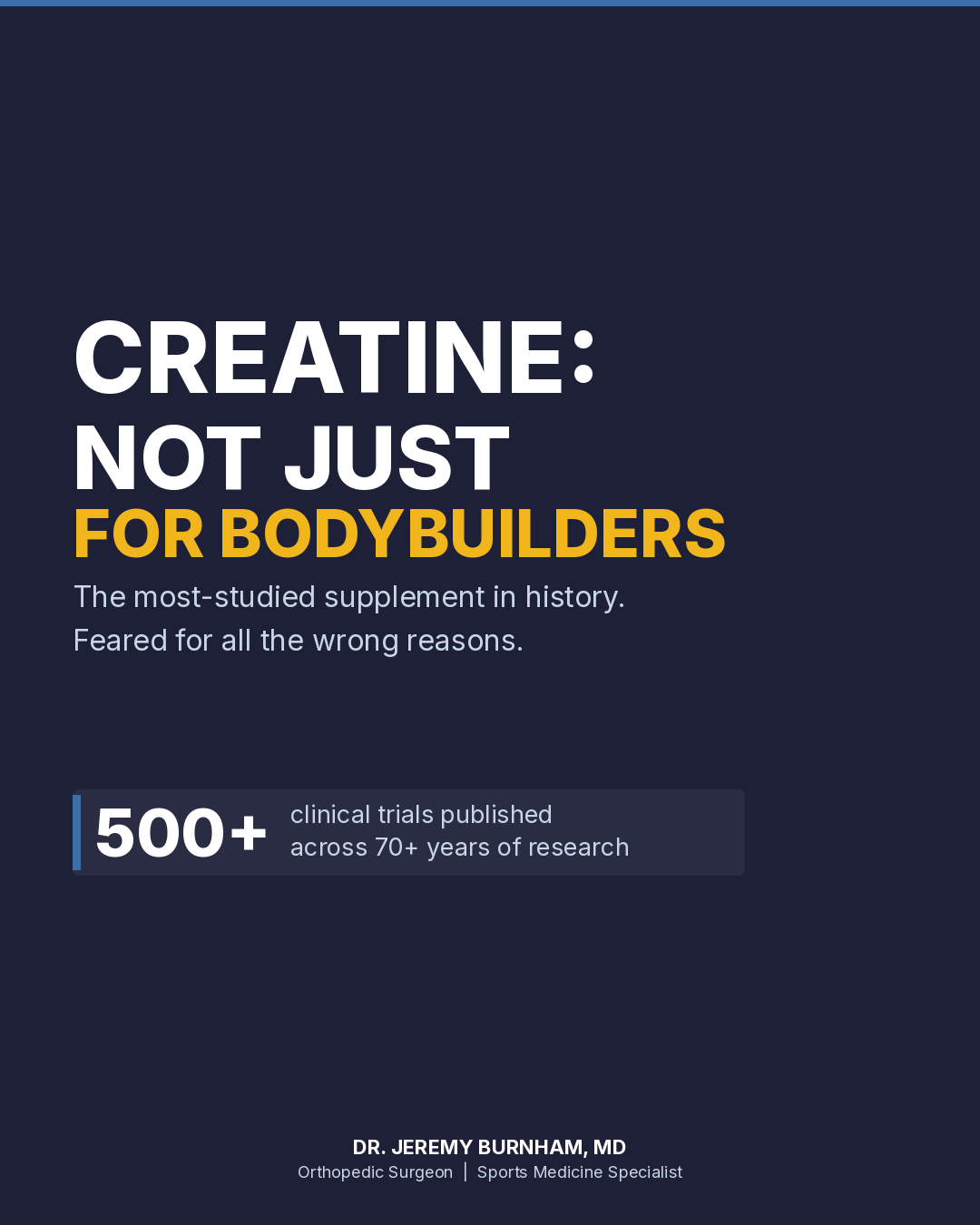
Creatine monohydrate is the most studied ergogenic nutritional supplement in sports science history. The International Society of Sports Nutrition (ISSN) Position Stand, published in the Journal of the International Society of Sports Nutrition and based on a review of more than 500 published studies spanning 70 years of research, concluded that creatine monohydrate is the most effective ergogenic nutritional supplement available to athletes in terms of increasing high-intensity exercise capacity and lean body mass during training.1 This review examines what that body of evidence actually shows, who stands to benefit beyond competitive athletes, and why the reputation for danger still lags the science by more than a decade.
▶ In This Article
How Creatine Works
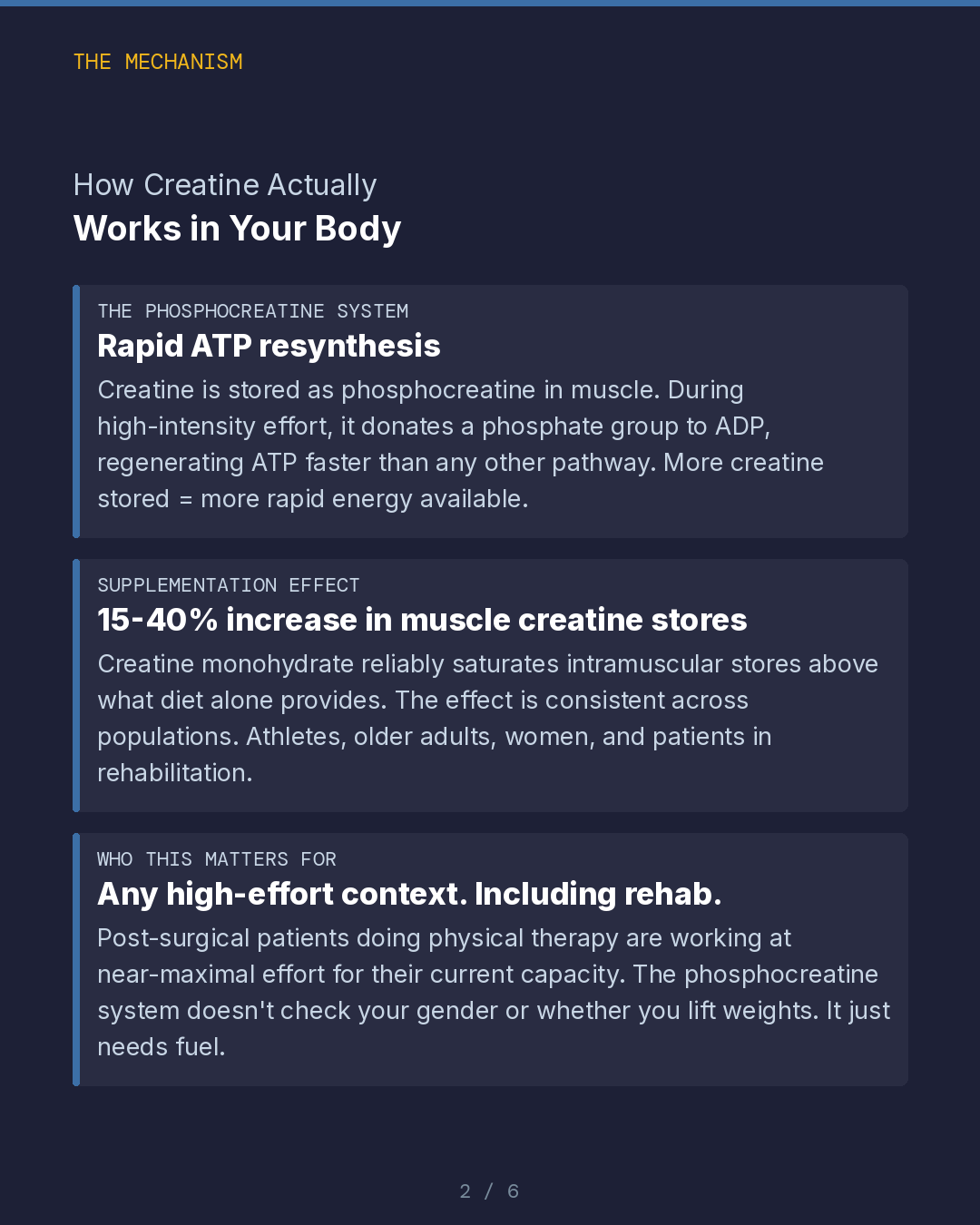
Creatine is a naturally occurring compound synthesized in the liver and kidneys from the amino acids arginine, glycine, and methionine. It is also obtained through diet, primarily from red meat and fish. Once inside muscle tissue, creatine binds with a phosphate group to form phosphocreatine, which serves as the body’s fastest reserve for rapid energy replenishment during short-burst, high-intensity activity.
During maximal effort, including sprinting, heavy resistance training, and explosive athletic movements, the primary cellular energy currency, adenosine triphosphate (ATP), depletes in seconds. The phosphocreatine system replenishes ATP faster than any other metabolic pathway by donating a phosphate group back to ADP. Supplementing with creatine monohydrate increases the muscle phosphocreatine pool by 15 to 40 percent, which means more stored energy is available for repeated high-intensity efforts before fatigue limits performance.1 The same phosphocreatine system is active in the brain, a point with growing implications for cognitive performance discussed later in this review.
What 70 Years of Research Shows
The ISSN Position Stand, authored by Kreider et al. and published in 2017, reviewed more than 500 peer-reviewed publications on creatine supplementation. The conclusions were direct: creatine monohydrate produces a 5 to 15 percent improvement in maximal power output and high-intensity exercise capacity, and approximately 1 to 2 kilograms of lean body mass gain over 4 to 12 weeks of supplementation combined with structured resistance training.1 These are not marginal findings from small pilot studies. They represent a consistent pattern across hundreds of independent trials conducted over seven decades.
A 2021 systematic review in the same journal by Antonio et al. specifically addressed the most frequently asked questions and misconceptions about creatine supplementation, reaching identical conclusions regarding safety and efficacy across a wide range of populations.2 The body of evidence on creatine monohydrate is among the most replicated and consistent in all of nutritional science. The fears attached to it have not been updated by new research. They have been recycled by supplement marketing and fitness media.

Addressing the Most Common Concerns
The concerns most people carry into a conversation about creatine are traceable to specific, identifiable sources. Each one deserves a direct response against the available evidence.
Kidney Damage
The kidney concern traces to a single metabolic fact: creatine is metabolized to creatinine in the body. Creatinine is a standard marker used in routine kidney function panels, and serum creatinine levels rise predictably with creatine supplementation. That rise reflects normal metabolism, not renal pathology. Multiple controlled trials in healthy individuals have demonstrated no adverse renal effects from creatine supplementation, including studies conducted at higher doses and over extended durations.1,2 The fear arose from clinicians and patients misinterpreting an elevated creatinine as kidney damage rather than recognizing it as an expected metabolic consequence of supplementation. Patients with pre-existing kidney disease should discuss supplementation with their treating physician before starting. In otherwise healthy individuals, the evidence is consistent: creatine monohydrate at standard doses does not damage kidneys.
Hair Loss
The hair loss concern originates from a single 2009 study conducted in college-aged rugby players, which found that creatine supplementation raised dihydrotestosterone (DHT) levels relative to testosterone. DHT is associated with androgenic alopecia in genetically predisposed individuals. The finding spread rapidly through fitness media and online forums. What the coverage consistently omitted: no randomized controlled trial has ever measured actual hair loss as a clinical outcome in creatine research. The fear propagated from a surrogate biomarker finding in one small study, not from any observation of clinically meaningful hair loss in a controlled population.2 The mechanistic concern is plausible for those with a strong genetic predisposition to androgenic alopecia, but the direct clinical evidence is absent.
Is Creatine Only for Men?
Every month, approximately 47,000 people search “creatine for women” online. The research tells a different story than what fitness culture has suggested: women have lower baseline muscle creatine stores than men, which means supplementation may produce equivalent or greater relative improvements in phosphocreatine saturation. Multiple randomized controlled trials enrolling female participants have demonstrated significant improvements in strength, power output, and lean mass preservation.1 Older women and postmenopausal individuals, who face accelerated sarcopenia and increased fracture risk, represent a population with particularly meaningful potential benefit from creatine supplementation combined with resistance training. The gender limitation attached to creatine has no basis in the peer-reviewed literature.
Weight Gain
Creatine supplementation causes muscle cells to draw in water through a process called cell volumization. In practice, this typically adds 1 to 2 kilograms on the scale within the first several weeks of supplementation. The weight gain is intracellular water retention, not fat accumulation, and it generally stabilizes after the initial loading period. For most athletes and active patients, this represents a non-issue or a modest functional benefit (increased cell hydration is associated with favorable anabolic signaling). For individuals where precise body composition measurements or weight class thresholds matter, the expected initial weight increase is worth anticipating in advance.
Creatine and Orthopedic Surgical Recovery
One application of creatine supplementation that receives far less attention in the public conversation is recovery from orthopedic surgery. Following joint procedures, disuse atrophy begins within days of immobilization. The muscle loss that occurs during the early postoperative period can take months to recover, and in some cases, pre-injury levels are never fully restored. This matters not only for athletic performance but for long-term joint stability, functional outcomes, and return-to-sport timelines.
Evidence supports creatine supplementation as an adjunct to supervised physical therapy during orthopedic rehabilitation. When combined with progressive loading and structured physical therapy, creatine supplementation appears to support lean muscle mass preservation and neuromuscular recovery during periods of reduced mechanical loading.1 It does not replace the rehabilitative process, and no supplement substitutes for the work of a structured recovery program. The evidence supports its use as a complement to, not a substitute for, physical therapy.
Patients recovering from ACL reconstruction, meniscus surgery, cartilage procedures, or other orthopedic procedures requiring extended rehabilitation represent a population where the lean mass-preserving effects of creatine supplementation carry real clinical significance. For a comprehensive overview of the ACL reconstruction process and what recovery involves, the team at Ochsner-Andrews Sports Medicine Institute has compiled a detailed evidence-based guide to ACL reconstruction and rehabilitation.
Creatine and Brain Health
The phosphocreatine energy system is not exclusive to skeletal muscle. The brain relies on the same rapid phosphocreatine-to-ATP conversion to meet its high and continuously fluctuating energy demands. This overlap in energy metabolism has increasingly drawn research attention toward whether creatine supplementation can produce meaningful effects on cognitive performance and brain health.
A 2021 review published in Nutrients by Roschel et al. examined the evidence on creatine supplementation and brain health across a broad range of populations. The review found support for creatine’s role in brain energy metabolism, with evidence for reduced cognitive fatigue and improvements in tasks requiring rapid mental processing, particularly under conditions of heightened cognitive demand or physiological stress such as sleep deprivation.3 The effects appear especially relevant for older adults concerned with preserving cognitive function, and for athletes navigating heavy training loads with reduced recovery time.
This benefit is rarely raised in the typical supplement conversation, which tends to center on muscle hypertrophy and athletic performance. The growing evidence base extends creatine’s potential clinical value well beyond the weight room and the training field.
The Evidence-Based Protocol
The dosing evidence for creatine supplementation is among the most settled in the sports nutrition literature. Three to five grams of creatine monohydrate per day represents the standard maintenance dose, supported by the full weight of the ISSN Position Stand and subsequent systematic reviews.1 Several practical points deserve specific attention:
Monohydrate only. Creatine monohydrate is the formulation with robust, independently replicated evidence. Proprietary variants marketed as superior, including ethyl ester, buffered creatine, and kre-alkalyn, lack meaningful comparative evidence and typically cost significantly more per serving. Monohydrate is the standard of care in the research literature, and it should be the clinical standard as well.
No loading phase is required. A loading protocol (approximately 20 grams per day for five to seven days) saturates muscle creatine stores faster but is not necessary to achieve full saturation. Three to five grams per day will reach the same endpoint within three to four weeks and is substantially better tolerated by individuals who experience gastrointestinal discomfort at higher single doses.
No cycling is necessary. There is no evidence to support periodic breaks from creatine supplementation. The body’s own creatine synthesis partially suppresses during supplementation and returns to baseline when supplementation is discontinued. Cycling on and off provides no physiological benefit and only creates unnecessary interruptions to a simple daily protocol.
Timing is not clinically significant. Creatine monohydrate can be taken at any point during the day. The supplement’s effects accumulate through sustained saturation of the muscle phosphocreatine pool, not through acute pre-exercise peaks. Consistency over time matters far more than the specific hour of ingestion.
For a broader look at the role of strength training and muscle mass preservation in long-term orthopedic health, including why muscular fitness matters well beyond the gym, the Ochsner-Andrews Sports Medicine team has also published a detailed review on strength training and sarcopenia prevention. The evidence for creatine and the evidence for progressive resistance training are deeply complementary, and both are underutilized in the populations that stand to benefit most.
About the Author
Jeremy M. Burnham, MD is a board-certified orthopedic surgeon and Director of Sports Medicine at Ochsner-Andrews Sports Medicine Institute in Baton Rouge, Louisiana. Following his orthopedic surgery residency at the University of Kentucky, he completed his sports medicine fellowship at the University of Pittsburgh Medical Center (UPMC), where he trained under the late Dr. Freddie Fu, a pioneer of anatomic ACL reconstruction, Dr. James Bradley, a renowned sports medicine surgeon and longtime professional team orthopedist, and Dr. Volker Musahl, an internationally recognized ACL surgeon and researcher. His team physician experience spans professional sports teams, the University of Pittsburgh, and Southern University. With 127 peer-reviewed publications, book chapters, and scientific presentations, Dr. Burnham is the most published ACL surgeon in Louisiana. His research focuses on advancing ACL reconstruction, optimizing return-to-sport outcomes, and pioneering injury prevention, and has been recognized with the Game Changer Award from the Arthritis Foundation and the Playmaker Award from AOSSM. He serves as a site principal investigator for two federally funded clinical trials (NIH STABILITY 2 and Department of Defense STaR Trial). View full credentials and publications.
The Bottom Line
Creatine monohydrate has more than 500 peer-reviewed studies and 70 years of research behind it. The International Society of Sports Nutrition identifies it as the most effective ergogenic supplement available in terms of high-intensity performance and lean mass accretion. The kidney concern is a metabolic misread. The hair loss concern is a single surrogate biomarker finding with no clinical outcome data behind it. Women benefit at least as much as men, and often more given lower baseline stores. The weight added in the first weeks is intracellular water, not fat.
The standard protocol is 3 to 5 grams of creatine monohydrate daily, no loading phase required, no cycling needed, no specific timing window required. Beyond athletic performance, the evidence supports meaningful applications in orthopedic surgical recovery, sarcopenia prevention in aging adults, and emerging data on cognitive function and brain health.
The reputation came from supplement marketing and fitness media. The evidence came from 500 peer-reviewed trials. Those two things have never aligned, and after seven decades, the research is no longer ambiguous.
References
- Kreider RB, Kalman DS, Antonio J, et al. International Society of Sports Nutrition position stand: safety and efficacy of creatine supplementation in exercise, sport, and medicine. J Int Soc Sports Nutr. 2017;14:18. doi:10.1186/s12970-017-0173-z
- Antonio J, Candow DG, Forbes SC, et al. Common questions and misconceptions about creatine supplementation: what does the scientific evidence really show? J Int Soc Sports Nutr. 2021;18(1):13. doi:10.1186/s12970-021-00412-w
- Roschel H, Gualano B, Ostojic SM, Rawson ES. Creatine Supplementation and Brain Health. Nutrients. 2021;13(2):586. doi:10.3390/nu13020586
Is creatine safe for your kidneys?
Yes, in healthy individuals. Creatine is metabolized to creatinine in the body, which causes a predictable rise in serum creatinine levels during supplementation. This rise reflects normal metabolism, not kidney damage. Multiple controlled trials have demonstrated no adverse renal effects from creatine monohydrate supplementation at standard doses, including in long-term studies. The concern arose from clinicians misreading an elevated creatinine as pathology rather than a metabolic consequence of supplementation. Patients with pre-existing kidney disease should discuss supplementation with their physician before starting.
Does creatine cause hair loss?
The hair loss concern originates from a single 2009 study in rugby players that found creatine raised dihydrotestosterone (DHT) levels, a hormone associated with androgenic alopecia in genetically predisposed individuals. Critically, no randomized controlled trial has ever measured actual hair loss as a clinical outcome in creatine research. The fear spread from one surrogate biomarker finding, not from any controlled observation of clinically meaningful hair loss. For individuals with a strong family history of androgenic alopecia, the mechanistic concern is worth acknowledging. For the general population, no clinical evidence supports this risk.
Should women take creatine?
Yes. Women have lower baseline muscle creatine stores than men, which means supplementation may produce equivalent or greater relative improvements in phosphocreatine saturation. Multiple randomized controlled trials enrolling female participants have demonstrated significant improvements in strength, power output, and lean mass preservation. Older women and postmenopausal individuals represent a population with particularly meaningful potential benefit, given the accelerated muscle loss and increased fracture risk that accompany aging. The perception that creatine is a supplement primarily for male athletes has no foundation in the peer-reviewed literature.
Do I need to do a loading phase when starting creatine?
No. A loading protocol of approximately 20 grams per day for five to seven days saturates muscle creatine stores faster but is not required to achieve full saturation. Taking three to five grams of creatine monohydrate daily without a loading phase will reach the same endpoint within three to four weeks. The maintenance-only approach is better tolerated by individuals who experience gastrointestinal discomfort at higher single doses. There is also no evidence to support cycling off creatine. Consistent daily use is the protocol supported by the ISSN Position Stand and subsequent systematic reviews.
Can creatine support recovery after orthopedic surgery?
Evidence supports creatine supplementation as an adjunct to supervised physical therapy during orthopedic rehabilitation. Following joint surgery, disuse atrophy begins within days and can take months to recover. When combined with progressive loading and structured physical therapy, creatine supplementation appears to support lean muscle mass preservation during periods of reduced mechanical loading. It does not replace the rehabilitative process, but the evidence supports its use as a complement to a supervised recovery program. Patients recovering from ACL reconstruction, meniscus surgery, or other procedures requiring extended rehabilitation may see clinically meaningful benefit from incorporating creatine supplementation during the recovery period.