
For a standard primary ACL reconstruction, the surgical portion itself typically takes between 50 and 120 minutes, with most cases averaging about 90 minutes. Patients should plan to spend roughly four to five hours at the surgery center from check-in to discharge, because the anesthesia block, positioning, recovery room, and discharge teaching all add time beyond the operation itself.
Dr. Jeremy Burnham, an orthopedic sports medicine surgeon at Ochsner-Andrews Sports Medicine Institute and the most-published ACL surgeon in Louisiana, performs several hundred ACL reconstructions each year. Selecting an ACL surgeon with high volume and expertise is an important factor in surgical outcomes. The actual time in the operating room depends on a handful of predictable factors: the graft chosen, whether the meniscus also needs to be repaired, whether a lateral augmentation procedure (LET or ALL reconstruction) is added, and whether the case is a first-time reconstruction or a revision. This page walks through each of those factors and explains what patients and families should expect during the entire surgery day.
📋 In This Article
- The Short Answer: About 90 Minutes of Surgical Time
- What Happens During Each Block of Time
- What Makes ACL Surgery Take Longer (or Shorter)
- Graft Choice Adds or Removes Minutes
- Meniscus Repair Adds About 20 to 45 Minutes
- Lateral Augmentation (LET or ALL)
- Revision ACL Reconstruction
- Multi-Ligament Knee Injury
- Dr. Burnham’s Approach: Precision First
- When ACL Surgery Runs Longer Than Expected
- What Happens After the Surgery Is Finished
- About Dr. Jeremy Burnham
- Frequently Asked Questions
- References
The Short Answer: About 90 Minutes of Surgical Time for a Standard Primary ACLR
The largest multicenter analysis of ACL reconstruction operative time comes from the Arthroscopy Association of North America (AANA) database. Across 1,180 primary ACL reconstructions performed by 135 high-volume surgeons, isolated ACL reconstruction (no additional procedures) averaged 88.4 minutes of surgical time (Condron et al., 2022). When minor concomitant work was added (for example, a limited debridement or partial meniscectomy), the case averaged 90.1 minutes. When a major concomitant procedure was added (such as a meniscus repair or multi-ligament work), the average climbed to 118.5 minutes.
Dr. Burnham’s practice tracks to the same distribution. Isolated primary ACL reconstructions at Ochsner-Andrews typically fall in the 45 to 90 minute surgical-time range. Cases that include meniscus repair, lateral augmentation, or cartilage work commonly run 90 to 130 minutes. Revision reconstructions and complex multi-ligament cases can extend to two or three hours, sometimes longer.
It helps to separate three timeframes that often get confused:
- Surgical time (skin to closure): 50 to 120 minutes for a typical primary ACLR.
- Operating room time: surgical time plus positioning, prepping, draping, anesthesia induction, and emergence. This adds 45 to 60 minutes to the surgical time.
- Total time at the surgery center: OR time plus pre-operative intake and post-operative recovery. A patient’s total footprint at the facility is usually four to five hours for an outpatient primary ACLR.
When people ask “how long will I be in surgery?”, they almost always mean the third one. That is the number relevant to family members waiting and the one that drives the practical logistics of the day.
What Happens During Each Block of Time
A typical outpatient primary ACL reconstruction day at an ambulatory surgery center plays out like this.
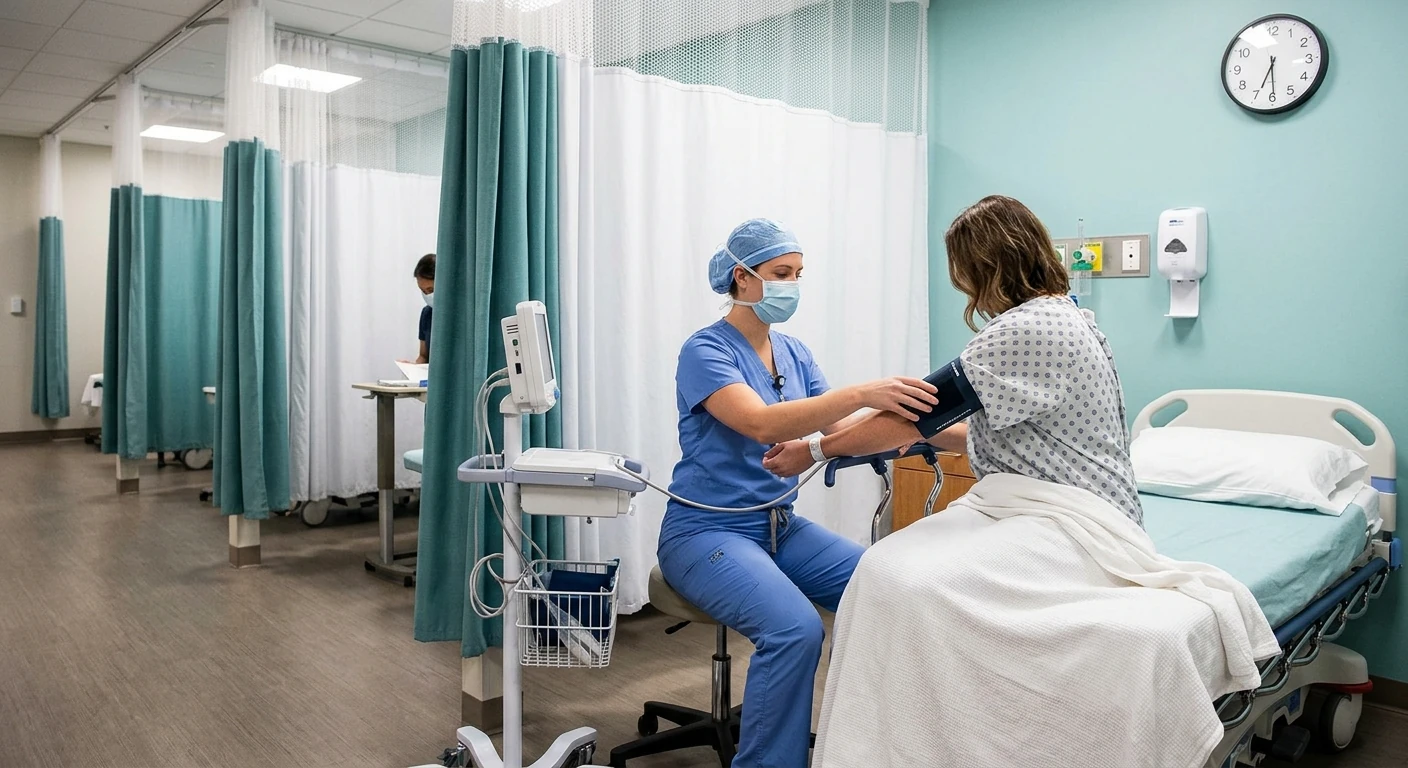
Pre-operative check-in (1 to 3 hours before surgical start). Patients arrive in comfortable clothes, check in at the desk, and are taken to a pre-op bay. A nurse takes vital signs, starts an IV, and reviews medications and allergies. The anesthesiologist meets with the patient and places a regional nerve block. For ACL reconstruction, this is typically an adductor canal block (numbs the front of the thigh and medial knee) and an IPACK block (numbs the back of the knee). Together, they keep the leg comfortable for the first 12 to 24 hours after surgery. Dr. Burnham meets briefly with the patient and family, answers any last-minute questions, and marks the surgical side. This entire block takes 45 to 90 minutes on average.
Transport to the operating room and induction (10 to 15 minutes). Once anesthesia is ready, the patient is wheeled into the OR. General anesthesia is induced (most patients are asleep within a minute or two). A breathing tube or laryngeal mask is placed and confirmed.
Positioning, prepping, and draping (15 to 20 minutes). The patient is positioned supine on the table. A tourniquet is placed on the thigh for use only if needed. The leg is positioned in a leg holder or against a lateral post that lets the knee flex to 90 degrees and beyond. The surgical team shaves any hair if needed, preps the leg with chlorhexidine or betadine, and applies sterile drapes. The arthroscopy tower (the column of equipment holding the camera, light source, shaver, and fluid pump) is brought into position.
The ACL reconstruction itself (50 to 120 minutes). This is the part patients mean when they ask how long the surgery takes. It breaks down into several phases: a diagnostic arthroscopy to evaluate the entire joint (5 to 10 minutes), graft harvest (15 to 25 minutes depending on the graft), preparation of the graft on the back table (performed by an assistant while the surgeon moves on to the next step), tunnel drilling in the tibia and femur (10 to 20 minutes), graft passage and fixation (10 to 20 minutes), and closure (10 to 15 minutes).

Emergence from anesthesia and transport to the recovery room (10 to 15 minutes). Once dressings are applied, the anesthesiologist wakes the patient and the breathing tube is removed. The patient is transferred to the post-anesthesia care unit (PACU).
Recovery room monitoring (60 to 120 minutes). Nurses monitor vitals, assess pain, and watch for any early complications. Most patients are comfortable because the nerve block is still active. A physical therapist or nurse fits the post-operative brace, reviews crutch use, and teaches the early home exercises. Once the patient is alert, has eaten a light snack, and is stable, the team clears them for discharge.
Discharge home (same day). Primary ACL reconstruction is an outpatient procedure. Patients go home the same day, typically four to five hours after they first arrived.
What Makes ACL Surgery Take Longer (or Shorter)
The single biggest predictor of surgical time is what else needs to be done besides the ACL. The Condron multicenter data quantifies this directly: isolated ACLR averaged 88.4 minutes, but adding a major concomitant procedure pushed the average to 118.5 minutes (Condron et al., 2022). That 30-minute delta is the reason two ACL cases on the same day can finish 45 minutes apart. Concomitant procedures also influence cost; see What does ACL replacement surgery cost? for a detailed breakdown of how graft choice and concurrent procedures affect the total price of the surgery.
Graft Choice Adds or Removes Minutes
Graft selection affects total case time mostly through harvest time. Dr. Burnham’s preferred graft for most active patients is the quadriceps tendon autograft, which takes about 10 to 20 minutes to harvest with a small incision above the patella. The bone-patellar tendon-bone (BTB) autograft takes slightly longer because the bone plugs on each end must be shaped and sized (20 to 25 minutes of harvest). The hamstring autograft is quick to harvest (15 to 20 minutes) but requires extra time to weave the two tendons into a four-strand construct on the back table. Allograft (tissue from a donor) skips harvest entirely but requires thaw, preparation, and size verification that typically adds 10 to 15 minutes to setup.
Surgical time is one of several factors Dr. Burnham weighs when recommending a graft. In a 2023 book chapter on ACL reconstruction technique, he and his co-author noted that the graft decision weighs patient age and activity level, donor-site morbidity, reported graft failure rates, surgeon familiarity with the graft, surgical time, associated complications, and cost-effectiveness (Pratt, McHardy, and Burnham, 2023). Surgical time is never the deciding factor on its own, but it is part of the full picture.
A recent technical innovation Dr. Burnham’s group has been involved in further streamlines the fixation portion of quadriceps tendon reconstruction. In a 2025 Arthroscopy Techniques paper, he and his co-authors described an all-suture cortical button fixation technique for quadriceps tendon autograft that eliminates some of the setup steps of traditional interference-screw fixation and shortens the fixation phase without sacrificing strength (Richman, Hop, McGinley, Burnham, Mitchell, Krych, and Frank, 2025).
Meniscus Repair Adds About 20 to 45 Minutes
Roughly half of ACL tears come with a torn meniscus, and preserving the meniscus through repair (rather than removing the torn piece) is strongly associated with better long-term knee health. Meniscus repair is categorized as a major concomitant procedure in the Condron data, and the operative time delta is consistent with a 20 to 60 minute add-on depending on the tear pattern. Simple longitudinal tears in the vascular “red-red” zone are fastest to repair. Root tears, radial tears, and complex bucket-handle displacements take longer because they require more sutures, more precise placement, and sometimes transtibial tunnel drilling for root repairs.
Patients whose MRI shows a concerning meniscus pattern should assume the surgery will run on the longer side of the typical range. Dr. Burnham discusses the expected meniscus work at the preoperative visit so families can plan accordingly. More detail on how meniscus repair affects ACL reconstruction is available on the ACL and meniscus surgery page.
Lateral Augmentation (LET or ALL Reconstruction) Adds About 10 to 20 Minutes
For patients at high risk of graft failure, such as young high-level pivoting athletes, patients with high-grade pivot shift on examination, or patients undergoing revision ACL reconstruction, Dr. Burnham often adds a lateral augmentation procedure. The two most common options are lateral extra-articular tenodesis (LET), which uses a strip of the iliotibial band tunneled under the lateral collateral ligament, and anterolateral ligament (ALL) reconstruction, which uses a free tendon graft routed over the outside of the knee.
Dr. Burnham co-authored a 2025 JISAKOS consensus paper from the Freddie Fu Panther Sports Medicine Symposium that surveyed 48 high-volume ACL surgeons on their lateral augmentation practice. Among many findings, the paper noted that LET offers advantages in decreased surgical time, avoidance of a free graft, and reduced cost compared with ALL reconstruction (Giusto et al., 2025). A separate recent cost-effectiveness analysis quantified the typical LET add-on at about 15 minutes of extra surgical time, with the procedure remaining cost-effective up to a 36-minute operative-time threshold (Villareal-Espinosa et al., 2026). ALL reconstruction generally adds somewhat more time because the graft has to be prepared separately.
The landmark STABILITY trial, which randomized 618 high-risk patients to hamstring ACLR alone versus hamstring ACLR with LET, showed that adding a LET reduced the 2-year clinical failure rate from 40% to 25% (Getgood et al., 2020). That reduction in failure is the reason a 15-minute operative-time addition is easily justified for the right patient.
Revision ACL Reconstruction Is Typically 2 to 3 Hours
When a previous ACL reconstruction has failed and needs to be redone, the case is almost always longer than a primary reconstruction. Dr. Burnham described the technical considerations in revision ACL reconstruction in a 2017 Operative Techniques in Orthopedics paper, noting that the revision case includes several steps that a primary case does not: removal of any retained hardware from the first surgery, evaluation and management of tunnel widening or malposition (sometimes requiring bone grafting of the old tunnels), management of any concurrent meniscus or cartilage damage, and graft selection that accounts for what autograft tissue is still available (Burnham, Herbst, Pauyo, Pfeiffer, Johnson, Fu, and Musahl, 2017).
For particularly complex revision cases, such as those with severely widened tunnels from the index surgery, Dr. Burnham may recommend a staged approach: a first surgery to remove hardware and bone-graft the old tunnels, followed three to six months later by the actual ACL reconstruction. Staging adds a second operating room visit but produces reliably better tunnel anatomy for the reconstruction. The MARS cohort, the largest multicenter database of revision ACL reconstructions, has documented that about 18% of revision ACLRs include a concurrent meniscus repair, and that meniscal repair failure rates are higher in the revision setting than in primary cases, underscoring how much more complex the revision environment is (Fox et al., 2025).
Multi-Ligament Knee Injury Can Push a Case to 4 Hours or More
Patients with injuries to the ACL and one or more of the posterior cruciate ligament, medial collateral ligament, lateral collateral ligament, or posterolateral corner sometimes require combined reconstructions in a single sitting. These cases often run three to five hours or are staged across two surgical days. Multi-ligament knee reconstruction is its own specialty within sports medicine surgery and is not the typical “how long is my ACL surgery going to take” scenario. Patients in this category receive a detailed separate timeline from the surgical team.
Dr. Burnham’s Approach: Precision First, Efficiency Through Volume
The fastest ACL surgery is not always the best ACL surgery. The dominant driver of long-term outcome is anatomic tunnel placement, the quality of the graft fixation, and the management of concurrent injuries. Dr. Burnham’s surgical approach is grounded in the principles described in his 2017 Arthroscopy Techniques paper on anatomic femoral and tibial tunnel placement, which prioritizes accurate tunnel position over speed (Burnham, Malempati, Carpiaux, Ireland, and Johnson, 2017). His current technique continues to follow those principles but has evolved and continues to improve as new fixation devices, graft preparation methods, and augmentation strategies emerge from his own research and from the broader ACL literature. The same 2017 paper explicitly describes a technique in which the tourniquet is used only briefly for hemostasis as needed, rather than inflated for the entire case. Prolonged tourniquet time is associated with muscle ischemia and can contribute to early post-operative quadriceps weakness. Dr. Burnham’s limited-tourniquet approach reflects an emphasis on the patient’s post-operative quadriceps recovery, which is the rate-limiting step for return to sport.
Efficiency at a high-volume center comes from a different place than rushing at the table. Dr. Burnham is Regional Department Head of Orthopedic Surgery for the Ochsner Health System. The surgical team that supports his ACL cases has performed the same workflow hundreds of times. Room turnover between cases, instrument setup, and graft preparation all happen faster at a high-volume center because the team is doing the same thing they did on the previous patient. The patient-facing consequence is predictable: families know approximately when the case will finish, transport times are shorter, and the recovery-room experience is more consistent.
A final point on graft selection and time: Dr. Burnham is a site principal investigator on the STABILITY 2 trial and a member of the PIVOT Study Group and the Panther Sports Medicine Symposium consensus group. His research output, which includes 53 peer-reviewed publications focused primarily on ACL reconstruction and knee preservation, informs the technical choices he makes in the OR. The choices that drive the best clinical outcomes also happen to drive reproducible, predictable operative times.
When ACL Surgery Runs Longer Than Expected
Most ACL reconstructions finish within the expected time window given to the family at check-in. Occasional cases run longer than planned, and there are two main reasons this happens.
Intraoperative findings that were not visible on MRI. MRI catches most, but not all, of the internal derangements in an injured knee. A ramp lesion on the posterior medial meniscus, a posterior root tear, a loose cartilage fragment, or a partial tear of a secondary ligament is sometimes identified only on the diagnostic arthroscopy at the start of the case. When these findings are identified, Dr. Burnham addresses them in the same sitting whenever doing so is safe and appropriate, because a second operation to fix a missed pathology is almost always worse for the patient than a slightly longer primary case. Families are updated during the surgery if the plan changes in a material way.
Technical challenges. Occasionally tunnels need to be repositioned because the first pass was not in the ideal anatomic footprint, or hardware from a previous unrelated surgery needs to be worked around. These situations are uncommon and are usually added to the case rather than requiring an entire workflow change.
Dr. Burnham’s team tells families at check-in what the estimated operative time is for the specific case. If the case runs long, the OR circulator updates the family in the waiting area.
What Happens After the Surgery Is Finished
Once the last stitch is in, the dressings, compression wrap, and post-operative brace are applied while the patient is still asleep. The anesthesiologist wakes the patient, and the breathing tube comes out. The patient is transferred to the PACU where nurses monitor recovery for 60 to 120 minutes.
Patients typically feel very little pain during this window because the adductor canal and IPACK blocks are still active. The leg will feel numb and heavy for the next 12 to 24 hours, and that is expected. Physical therapy staff at the surgery center teach crutch use and review early exercises, most importantly straight-leg raises and quadriceps activation drills. A post-operative ACL brace is fitted and locked at zero degrees of extension for ambulation. The brace is worn for ambulation during the first four to six weeks and is not worn while sleeping.
Most patients are cleared for discharge home the same day. A responsible adult must drive the patient home and stay for the first 24 hours. For a full breakdown of the post-operative recovery schedule, see ACL Surgery Recovery Week by Week and the more detailed ACL Surgery Recovery Timeline.
About Dr. Jeremy Burnham
Dr. Jeremy Burnham is Regional Department Head of Orthopedic Surgery for Ochsner Health and practices sports medicine at Ochsner-Andrews Sports Medicine Institute in Baton Rouge, Louisiana. He is a board-certified orthopedic surgeon with subspecialty fellowship training in sports medicine from the University of Pittsburgh Medical Center. Dr. Burnham is the most-published ACL surgeon in Louisiana, with 53 peer-reviewed publications, 32 book chapters, and 61 podium and poster presentations. He is a site principal investigator on the STABILITY 2 trial and a member of the PIVOT Study Group and the Panther Sports Medicine Symposium consensus group. Learn more on the ACL reconstruction pillar page.
Frequently Asked Questions
How long does the actual ACL surgery take?
The surgical portion of a standard primary ACL reconstruction typically takes between 50 and 120 minutes, with most cases averaging about 90 minutes. Cases with concomitant procedures such as meniscus repair or lateral augmentation commonly run 90 to 130 minutes. Revision ACL reconstruction typically takes two to three hours, and multi-ligament reconstructions can run three to five hours or be staged across two surgical days.
Does meniscus repair add much time to ACL surgery?
Yes. Meniscus repair is classified as a major concomitant procedure and typically adds 20 to 60 minutes to the operative time depending on the tear pattern. Simple longitudinal tears are fastest; root tears, radial tears, and complex bucket-handle patterns take longer.
How much longer is ACL surgery with a LET or ALL reconstruction?
LET (lateral extra-articular tenodesis) typically adds about 15 minutes. ALL (anterolateral ligament) reconstruction usually adds slightly more because it requires a separate graft. The STABILITY trial demonstrated that adding a LET reduced the 2-year graft failure rate from 40% to 25% in high-risk patients, which justifies the additional operative time for the right patient.
Is revision ACL surgery longer than first-time surgery?
Yes. Revision ACL reconstruction typically takes two to three hours because of hardware removal, tunnel management, and more complex graft decisions. Some revision cases are staged across two surgical days when tunnel widening is severe.
How long will I be at the surgery center total?
Plan on four to five hours from check-in to discharge for a standard primary ACL reconstruction. This includes pre-operative intake, the regional nerve block, anesthesia induction, the surgery itself, and recovery-room monitoring.
Will I be under anesthesia the whole time?
Yes. ACL reconstruction is performed under general anesthesia, usually combined with a regional adductor canal and IPACK block. The general anesthesia lasts for the full operative time plus induction and emergence. The regional block then keeps the leg numb for 12 to 24 hours after the patient wakes up.
References
- Condron NB, Cotter EJ, Naveen NB, et al. Increasing patient age, ambulatory surgery center setting, and surgeon experience are associated with shorter operative duration for anterior cruciate ligament reconstruction. Arthrosc Sports Med Rehabil. 2022;4(4):e1323-e1329. DOI: 10.1016/j.asmr.2022.04.015 | PMID: 36033177
- Giusto JD, Konstantinou E, Rabuck SJ, Lesniak BP, Hughes JD, Irrgang JJ, Musahl V, Burnham JM; PANTHER ACL Treatment Group. When is anterolateral complex augmentation indicated? Perspectives from the 2024 Freddie Fu Panther Sports Medicine Symposium. J ISAKOS. 2025;11:100393. DOI: 10.1016/j.jisako.2025.100393 | PMID: 39909384 | JMB PDF
- Pratt J, McHardy R, Burnham JM. Anterior cruciate ligament reconstruction: bone tunnel placement, graft choice, and graft fixation. In: Knee Arthroscopy and Knee Preservation Surgery. Cham: Springer; 2023. DOI: 10.1007/978-3-031-29430-3_31 | JMB PDF
- Burnham JM, Malempati CS, Carpiaux A, Ireland ML, Johnson DL. Anatomic femoral and tibial tunnel placement during anterior cruciate ligament reconstruction: anteromedial portal all-inside and outside-in techniques. Arthrosc Tech. 2017;6(2):e275-e282. DOI: 10.1016/j.eats.2016.09.035 | PMID: 28580242
- Richman EH, Hop JC, McGinley BM, Burnham JM, Mitchell JJ, Krych AJ, Frank RM. All-suture cortical button fixation in all-inside anterior cruciate ligament reconstruction with quadriceps tendon autograft. Arthrosc Tech. 2025;14(12):103956. DOI: 10.1016/j.eats.2025.103956 | PMID: 41541373 | JMB PDF
- Burnham JM, Herbst E, Pauyo T, Pfeiffer T, Johnson DL, Fu FH, Musahl V. Technical considerations in revision anterior cruciate ligament (ACL) reconstruction. Oper Tech Orthop. 2017;27(1):63-69. DOI: 10.1053/j.oto.2017.01.012 | PMID: 28989265 | JMB PDF
- Getgood AMJ, Bryant DM, Litchfield R, et al; STABILITY Study Group. Lateral extra-articular tenodesis reduces failure of hamstring tendon autograft anterior cruciate ligament reconstruction: 2-year outcomes from the STABILITY Study randomized clinical trial. Am J Sports Med. 2020;48(2):285-297. DOI: 10.1177/0363546519896333 | PMID: 31940222
- Villareal-Espinosa JB, et al. A cost-effectiveness analysis of the addition of autograft lateral extra-articular procedures to primary anterior cruciate ligament reconstruction. Orthop J Sports Med. 2026;14(3):23259671251407259. DOI: 10.1177/23259671251407259 | PMID: 41836000
- Fox JA, Huston LJ, Haas AK, Pennings JS, Wright RW; MARS Group. Meniscal repair in the setting of revision anterior cruciate ligament reconstruction: 6-year follow-up results from the MARS cohort. Am J Sports Med. 2025;53(14):3435-3445. DOI: 10.1177/03635465251387333 | PMID: 41220248