
When a patient tears the anterior cruciate ligament, the decision about ACL reconstruction is really several decisions wrapped into one, and the most consequential of them is graft choice. The four options most surgeons consider are the quadriceps tendon, the patellar tendon (bone-patellar tendon-bone, or BTB), the hamstring tendon, and allograft (donor) tissue. Each has a different biomechanical profile, a different healing trajectory, and a different set of trade-offs during recovery.
At the Panther Global Summit global perspective published in 2014, Middleton, Fu, and colleagues surveyed the global graft preference of high-volume ACL surgeons and found hamstring tendon at 53 percent, patellar tendon at 23 percent, allograft at 13 percent, and quadriceps tendon at 11 percent [1]. The landscape has shifted since. At the highest level of cutting and pivoting athletics, bone-patellar tendon-bone remains the dominant graft: in a 2024 survey of all 32 NFL head team physicians, 97 percent used BPTB autograft for primary reconstruction [2]. Among the broader literature, quadriceps tendon research has accelerated dramatically, with one bibliometric analysis finding that 260 of the 405 PubMed papers on QT ACL reconstruction were published in the five years from 2018 to 2023 [3]. BTB is still the long-standing gold standard for young cutting and pivoting athletes with more than thirty years of outcomes data behind it, and QT has emerged over the past decade as a strong alternative autograft with a growing biomechanical and imaging evidence base. Each of the four primary graft options has a place in the right patient. Dr. Jeremy Burnham, a fellowship-trained sports medicine surgeon at Ochsner-Andrews Sports Medicine Institute in Baton Rouge, uses graft selection as a patient-specific decision rather than a default, and the sections below walk through the evidence behind each option.
📋 In This Article
- The graft decision framework
- Head-to-head comparison table
- Quadriceps tendon: the modern primary autograft
- Patellar tendon (BTB): the historical standard
- Hamstring tendon: where it still fits
- Allograft: selective use, older and lower-demand patients
- Why quads get weak (and it’s not the graft)
- How Dr. Burnham chooses a graft
- Patient story: quad tendon ACL reconstruction
- Frequently asked questions
The Graft Decision Framework
There is no single best graft for every patient. The right choice depends on the patient’s age, activity level, sport demands, anatomy, prior surgeries, and concurrent injuries. A 16-year-old soccer player with generalized ligamentous laxity needs a different graft strategy than a 45-year-old recreational skier returning after a first-time tear. The clinically meaningful differences among the four options come down to graft strength and volume, healing biology, donor-site morbidity, retear rates in young active patients, and the rehab trajectory each graft imposes.
At Ochsner-Andrews, the default primary graft for most young, active patients is the quadriceps tendon, with the patellar tendon a strong second option. Hamstring autograft and allograft are used selectively, for specific patient profiles discussed below. Every graft discussion at the consultation covers the mechanical evidence, the expected recovery curve, and the specific technique adjustments that mitigate the weaknesses of each option. The decision-making process is informed by Dr. Burnham’s expertise in choosing the right ACL surgeon who can tailor graft selection to individual patient needs.
Head-to-Head Comparison
The table below summarizes the four primary graft options across the variables that most influence clinical outcomes. Numbers in the biomechanics column reflect peer-reviewed comparisons; percentages in the rehab column reflect Dr. Burnham’s own published data from the University of Pittsburgh Medical Center fellowship cohort.
| Graft | Source | Biomechanics | Key Strengths | Key Trade-Offs |
|---|---|---|---|---|
| Quadriceps Tendon (QT) | Patient’s own quad tendon, above the kneecap | 88% greater intra-articular graft volume and 72% greater load-to-failure than BTB; 20% more collagen per cross-section; approximately 2x BTB cross-section area [4,6] | Strong, large-volume graft; reliable sizing; smaller incision than BTB; less anterior knee pain than BTB; lower infection risk than hamstring; better T2 MRI maturation at 6 months than hamstring [7] | Harvest site at the quad tendon; early quad weakness driven by arthrogenic muscle inhibition rather than the harvest itself (see AMI section below) |
| Patellar Tendon (BTB) | Central third of patient’s patellar tendon with bone blocks on each end | Long history in ACL reconstruction literature; bone-to-bone healing at both ends; strong fixation | Proven track record; excellent fixation; strong choice in elite-level cutting and pivoting athletes where bone-to-bone healing is desired | Anterior knee pain and kneeling discomfort are more common than with QT or hamstring; small but real risk of patellar fracture; slightly longer incision |
| Hamstring Tendon | Patient’s own semitendinosus, often with gracilis | Commonly doubled or quadrupled for size; soft tissue-to-bone healing on both ends | Smaller cosmetic incision; less anterior knee pain than BTB; can be a reasonable choice in smaller-framed patients | Graft diameter can be variable (under 8 mm diameter grafts carry higher retear risk); measurable hamstring weakness can persist; slower tendon-to-bone incorporation |
| Allograft (Donor Tissue) | Cadaveric soft tissue, processed by a tissue bank | Varies by tissue type and processing; sterilization can degrade mechanical properties | No donor-site morbidity; shorter operative time; useful in revision and multi-ligament reconstruction | Higher retear rates in young, active patients (multiple studies); not recommended as a primary graft for patients under 25 playing cutting or pivoting sports |
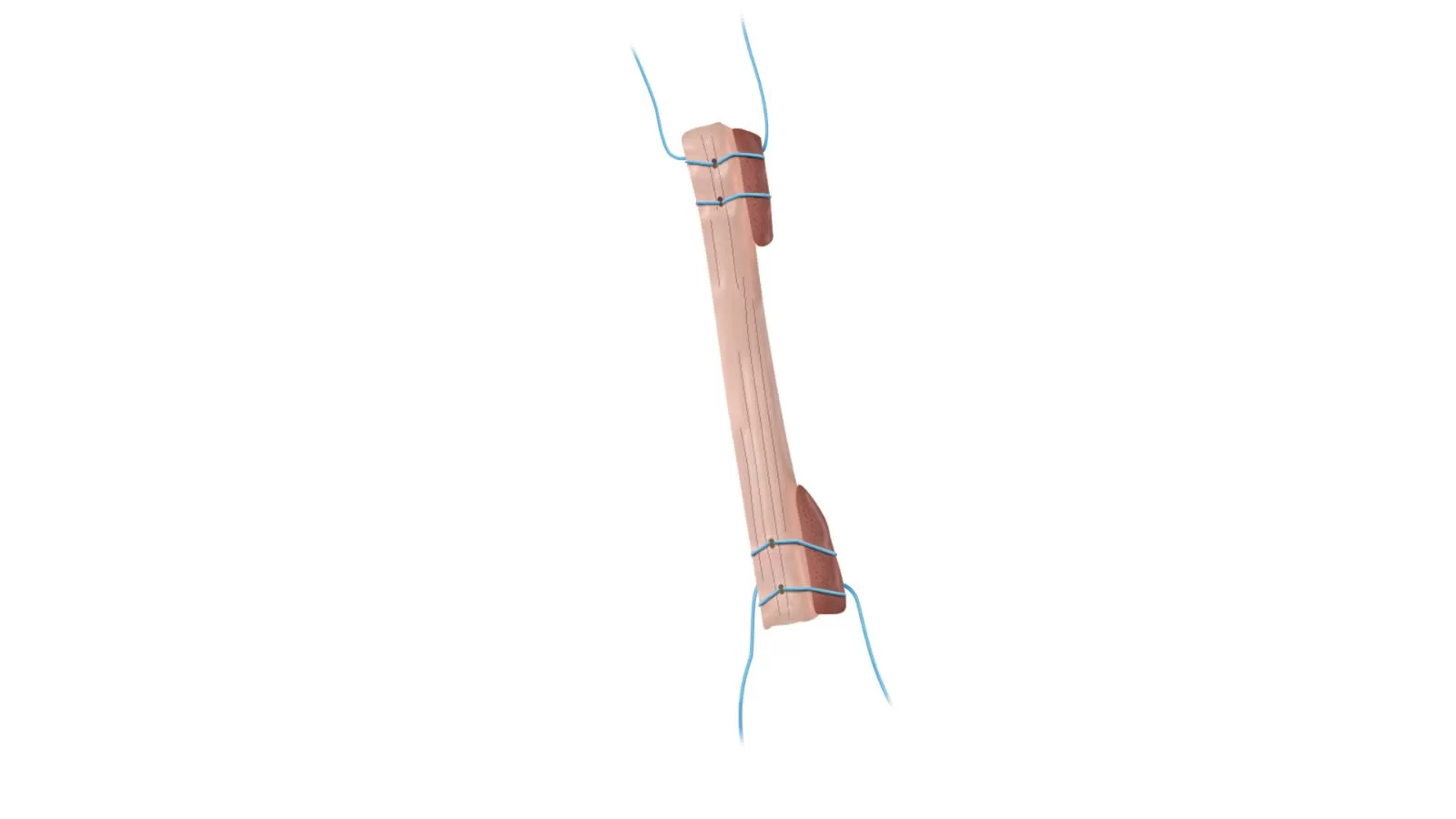

Quadriceps Tendon: The Modern Primary Autograft
The quadriceps tendon has moved from a niche salvage option to a mainstream autograft choice over the past decade, and the biomechanical data explain the shift. In head-to-head comparisons, the quadriceps tendon offers roughly 88 percent greater intra-articular graft volume than the patellar tendon, 72 percent greater load-to-failure, 20 percent more collagen per cross-section area, and approximately twice the cross-section area overall [4,6]. Because the tendon is thick, a partial-thickness harvest leaves roughly 80 percent of native quadriceps tendon strength intact in the residual tendon.
Graft maturation on postoperative imaging favors the quadriceps tendon as well. In a T2-weighted MRI study at six months, Ma, Fu, and colleagues reported superior graft maturation signal in quadriceps tendon grafts compared to hamstring grafts [7]. The practical implication is a graft that is mechanically strong at time zero and biologically progressing on schedule.
Technique adjustments that matter
The technique details change the recovery curve. Dr. Burnham uses a partial-thickness harvest rather than a full-thickness harvest, with a minimally invasive incision. The harvest site is not overtightened on closure; the deep tendon layer can be left open without compromising function, and the paratenon is closed carefully to protect the tissue plane that supports healing. In selected patients, amnion augmentation is used at the harvest site to support soft-tissue healing, a single adjunct covered in depth on the amnion application page. Imaging studies show that the quadriceps tendon regenerates substantially over time in most patients, and many return to a visibly symmetric quad tendon on MRI within the first postoperative year; Dr. Burnham reviewed this data on the quad tendon regrowth page.
Patellar Tendon (BTB): The 30-Year Gold Standard
The bone-patellar tendon-bone autograft has been the gold standard of ACL reconstruction for more than thirty years. It is the graft against which every other graft is still measured, and it earned that status the hard way, with two generations of outcome data in cutting and pivoting athletes at every level of sport. For high-demand athletes, BTB remains the graft many surgeons reach for first, and it is the second most-chosen graft in Dr. Burnham’s practice.
The biological argument for BTB is the bone plug at each end of the graft. Bone blocks in the femoral and tibial tunnels allow bone-to-bone healing, which is the fastest form of tendon fixation biology and one reason BTB integrates rapidly on postoperative imaging. The fixation constructs used with BTB are mechanically strong, and the literature consistently shows low retear rates in young athletes. Scandinavian national registry data covering more than 45,000 primary ACL reconstructions found lower revision rates with patellar tendon autograft compared with hamstring autograft at mid-term follow-up [14], and the Kaiser Permanente ACL Reconstruction Registry showed similar graft-choice effects on revision risk [5].
The trade-offs are well documented: kneeling discomfort, anterior knee pain, a longer incision at the tendon harvest site, and a small but real risk of patellar fracture. For patients whose sport or occupation involves frequent kneeling, such as flooring installers or wrestlers, these considerations can tip the decision toward a different graft. For a cutting and pivoting athlete who will tolerate the anterior knee trade-off, BTB still delivers the kind of outcomes data that only thirty years of elite-level use can produce.
Hamstring Tendon: Where It Still Fits
The hamstring autograft uses the semitendinosus tendon, often combined with the gracilis, doubled or quadrupled to create a graft of adequate diameter. Fixation is soft tissue to bone on both ends, which heals more slowly than bone-to-bone fixation. The hamstring graft is easy to harvest, avoids anterior knee pain, and for many years was the most commonly used ACL autograft worldwide.
Contemporary registry and MOON cohort data, however, have shifted the conversation. In the MOON prospective cohort of 2,488 primary ACL reconstructions, hamstring autograft was associated with a higher rate of subsequent ACL injury compared with patellar tendon autograft, particularly in young active patients [11]. Graft diameter is a large part of the story: Magnussen and colleagues reported that grafts smaller than approximately 8 millimeters carry a measurably higher early revision rate in young patients, and the harvested tendon diameter can be difficult to predict in advance [12]. The Norwegian Cruciate Ligament Registry, covering 12,643 patients, found a significantly higher risk of revision with hamstring tendon grafts compared with patellar tendon grafts [13], and a Scandinavian registry study of 45,998 primary ACL reconstructions reported the same pattern [14]. Kaiser Permanente registry data in the United States are broadly consistent [5].
There are patients for whom the hamstring is a reasonable first choice, particularly smaller-framed patients, patients who want to avoid any anterior knee pain risk, and patients whose sports place less demand on hamstring strength. Measurable hamstring weakness after hamstring harvest has been documented in Dr. Burnham’s own Biodex comparison work and is clinically meaningful at the 5-to-8-month and 9-month time points [8]. When a hamstring graft is chosen, rehab planning accounts for the persistent hamstring deficit and emphasizes symmetric strength before return to sport.
Allograft: Selective Use, Older and Lower-Demand Patients
Allograft tissue comes from a cadaveric donor and is processed, tested, and distributed by a tissue bank. Allograft eliminates the donor-site morbidity that comes with any autograft and shortens operative time. Those advantages are most valuable in revision ACL surgery, multi-ligament reconstruction, and patients who are older or whose activity level is lower.
The caveat for allograft is well established in the literature: in young, active patients under approximately 25 years of age playing cutting or pivoting sports, allograft ACL reconstructions carry higher retear rates than autograft. For that reason, allograft is rarely the right primary graft choice for a high school or college athlete, and it is almost never Dr. Burnham’s first choice in a young primary ACL patient. In a 30-year-old recreational athlete, a revision case, or a multi-ligament reconstruction where autograft harvest would be excessive, allograft earns its place.
Why Quads Get Weak (And It’s Not the Graft)
One of the most persistent misconceptions about the quadriceps tendon graft is that the harvest itself weakens the quad. The evidence does not support that framing. Early postoperative quadriceps weakness is driven primarily by arthrogenic muscle inhibition, or AMI, a neurologic phenomenon in which altered afferent signaling from the injured knee inhibits motor drive to the quadriceps. In the landmark investigation by Konishi, Fukubayashi, and Takeshita, mechanoreceptor damage from the ACL injury itself was identified as the primary mechanism of post-ACL quad atrophy, a finding that applies to every graft type including bone-patellar tendon, hamstring, quadriceps tendon, and allograft [9].
In other words, AMI is an injury problem, not a harvest problem. Rehab that treats the quad as a pure strengthening problem misses the neurologic side of the equation. In the approach published by Diermeier and colleagues in KSSTA, the early quad rehab after ACL reconstruction is treated more like rehabilitation of a tendinopathy: eccentric loading engages the Golgi tendon organs and mechanoreceptors that drive neural re-engagement, and hip-flexion-angle manipulation leverages the two-joint function of the rectus femoris to bias different portions of the quadriceps [10]. The treatment principle parallels Achilles tendon rehabilitation, where neural re-engagement precedes and enables true strength gain.
Dr. Burnham’s own research quantifies how long this neural and strength recovery actually takes. In a University of Pittsburgh Medical Center fellowship cohort of 73 primary ACL reconstructions studied with Biodex isokinetic testing, 74 percent of quadriceps tendon patients did not meet published running criteria at 5 to 8 months postoperatively, and 87 percent did not meet return-to-play criteria at the same window [8]. That finding is not a criticism of the quadriceps tendon graft; it is a reminder that the rehab timeline published in marketing materials is rarely the rehab timeline real patients experience, regardless of graft. At the same cohort, hamstring patients showed clinically meaningful hamstring weakness at both measured time points. The lesson is that every graft has a rehab signature, and the signature has to be respected.
How Dr. Burnham Chooses a Graft
The graft decision is made patient-by-patient during the preoperative consultation. A young, active patient undergoing primary ACL reconstruction is almost always a candidate for quadriceps tendon autograft, with bone-patellar tendon-bone autograft as a strong alternative. Patellar tendon becomes a first choice for certain elite-level cutting and pivoting athletes, particularly where the surgeon and patient place a high premium on bone-to-bone healing. Hamstring autograft is reserved for smaller-framed patients and patients for whom the specific kneeling-related trade-offs of BTB are disqualifying. Allograft is reserved for revision surgery, multi-ligament knee reconstruction, and patients over approximately 30 years of age with lower activity demands.
Concurrent injuries shape the decision as well. A patient with a concurrent meniscus repair faces a modified weight-bearing and range-of-motion protocol that is already demanding; the graft choice should support, not compete with, that healing profile. A patient with generalized ligamentous laxity, a revision case, or a high-grade pivot shift may benefit from additional procedures such as anterolateral ligament reconstruction. The graft is one variable in a larger reconstruction plan, not a standalone product choice. A patient who wants to understand the full reconstruction strategy can review the overall ACL reconstruction overview, the week-by-week recovery timeline, the rehab exercise progression, and the return-to-sport framework.
Patient Story: Quad Tendon ACL Reconstruction
Jovahn Saint-Vil returned to basketball after a quadriceps tendon ACL reconstruction with Dr. Burnham. In this conversation he walks through his graft decision with his surgeon, how he approached rehab, and what the recovery actually looked like at each phase. The surgical plan, the rehab arc, and the return-to-sport criteria all connect back to the graft choice framework on this page.
About the Author
Dr. Jeremy Burnham is a board-certified, fellowship-trained orthopedic surgeon and sports medicine specialist at Ochsner-Andrews Sports Medicine Institute in Baton Rouge, Louisiana. He completed orthopedic residency at the University of Kentucky and sports medicine fellowship at the University of Pittsburgh Medical Center under Drs. Freddie Fu, Volker Musahl, and James Bradley. Dr. Burnham is the most-published ACL surgeon in Louisiana, with 53 peer-reviewed publications, 13 book chapters, 61 podium and poster presentations, and active site principal investigator roles on national ACL research networks including PIVOT, Panther ACL, and STABILITY 2.
Clinical focus: ACL reconstruction, complex and revision knee reconstruction, cartilage restoration, meniscus repair, and sports injury care. Full biography · Research and publications
References
- Middleton KK, Hamilton T, Irrgang JJ, Karlsson J, Harner CD, Fu FH. Anatomic anterior cruciate ligament (ACL) reconstruction: a global perspective. Part 1. Knee Surg Sports Traumatol Arthrosc. 2014;22(7):1467-1482. doi:10.1007/s00167-014-2846-3 · PubMed
- Arner JW, Bradley JP. Practice patterns and return-to-sports timing of National Football League head team physicians for ACL reconstruction. Orthop J Sports Med. 2024;12(10):23259671241274139. doi:10.1177/23259671241274139 · PubMed
- D’Ambrosi R, Kambhampati SBS, Meena A, et al. The “Golden Age” of quadriceps tendon grafts for the anterior cruciate ligament: a bibliometric analysis. J ISAKOS. 2024;9(4):672-681. doi:10.1016/j.jisako.2024.03.007 · PubMed
- Shani RH, Umpierez E, Nasert M, Hiza EA, Xerogeanes J. Biomechanical comparison of quadriceps and patellar tendon grafts in anterior cruciate ligament reconstruction. Arthroscopy. 2016;32(1):71-75. doi:10.1016/j.arthro.2015.06.051 · PubMed
- Maletis GB, Inacio MCS, Funahashi TT. Risk factors associated with revision and contralateral anterior cruciate ligament reconstructions in the Kaiser Permanente ACLR registry. Am J Sports Med. 2015;43(3):641-647. doi:10.1177/0363546514561745 · PubMed
- Mulford JS, Hutchinson SE, Hang JR. Outcomes for primary anterior cruciate reconstruction with the quadriceps autograft: a systematic review. Knee Surg Sports Traumatol Arthrosc. 2013;21(8):1882-1888. doi:10.1007/s00167-012-2212-2 · PubMed
- Ma Y, Murawski CD, Rahnemai-Azar AA, Maldjian C, Lynch AD, Fu FH. Graft maturity of the reconstructed anterior cruciate ligament 6 months postoperatively: a magnetic resonance imaging evaluation of quadriceps tendon with bone block and hamstring tendon autografts. Knee Surg Sports Traumatol Arthrosc. 2015;23(3):661-668. doi:10.1007/s00167-014-3302-0 · PubMed
- Hughes JD, Burnham JM, Hirsh A, Musahl V, Fu FH, Irrgang JJ, Lynch AD. Comparison of short-term Biodex results after anatomic anterior cruciate ligament reconstruction among 3 autografts. Orthop J Sports Med. 2019;7(5):2325967119847630. doi:10.1177/2325967119847630 · PubMed · JMB publication list
- Konishi Y, Fukubayashi T, Takeshita D. Possible mechanism of quadriceps femoris weakness in patients with ruptured anterior cruciate ligament. Med Sci Sports Exerc. 2002;34(9):1414-1418. doi:10.1249/01.MSS.0000027628.04801.27 · PubMed
- Diermeier T, Rothrauff BB, Engebretsen L, et al. Treatment after anterior cruciate ligament injury: Panther Symposium ACL Treatment Consensus Group. Knee Surg Sports Traumatol Arthrosc. 2020;28(8):2390-2402. doi:10.1007/s00167-020-06012-6 · PubMed
- Kaeding CC, Pedroza AD, Reinke EK, Huston LJ, MOON Consortium, Spindler KP. Risk factors and predictors of subsequent ACL injury in either knee after ACL reconstruction: prospective analysis of 2488 primary ACL reconstructions from the MOON cohort. Am J Sports Med. 2015;43(7):1583-1590. doi:10.1177/0363546515578836 · PubMed
- Magnussen RA, Lawrence JT, West RL, Toth AP, Taylor DC, Garrett WE. Graft size and patient age are predictors of early revision after anterior cruciate ligament reconstruction with hamstring autograft. Arthroscopy. 2012;28(4):526-531. doi:10.1016/j.arthro.2011.11.024 · PubMed
- Persson A, Fjeldsgaard K, Gjertsen JE, et al. Increased risk of revision with hamstring tendon grafts compared with patellar tendon grafts after anterior cruciate ligament reconstruction: a study of 12,643 patients from the Norwegian Cruciate Ligament Registry, 2004-2012. Am J Sports Med. 2014;42(2):285-291. doi:10.1177/0363546513511419 · PubMed
- Gifstad T, Foss OA, Engebretsen L, et al. Lower risk of revision with patellar tendon autografts compared with hamstring autografts: a registry study based on 45,998 primary ACL reconstructions in Scandinavia. Am J Sports Med. 2014;42(10):2319-2328. doi:10.1177/0363546514548164 · PubMed
Frequently Asked Questions
Which ACL graft is the best?
There is no single best graft. For most young, active patients undergoing a primary ACL reconstruction, the quadriceps tendon and the bone-patellar tendon-bone autograft are the leading options, with quadriceps tendon the first choice in many contemporary practices because of its greater graft volume, greater load-to-failure, and lower anterior knee pain risk. Hamstring autograft fits selected smaller-framed patients. Allograft is best reserved for revision cases, multi-ligament reconstructions, and patients over approximately 30 with lower activity demands. The right choice is made patient-by-patient.
What is the quadriceps tendon ACL graft?
The quadriceps tendon ACL graft is an autograft taken from the patient’s own quadriceps tendon above the kneecap. A partial-thickness harvest removes approximately half the tendon thickness and leaves the remaining tendon to heal and remodel. The harvested segment is used to reconstruct the torn ACL. Compared to the patellar tendon, the quadriceps tendon provides roughly 88 percent greater graft volume, 72 percent greater load-to-failure, and 20 percent more collagen per cross-section area.
Does the quadriceps tendon graft cause permanent quadriceps weakness?
No. Early quadriceps weakness after ACL reconstruction is caused primarily by arthrogenic muscle inhibition, a neurologic response to the injury itself, not by the tendon harvest. This phenomenon occurs with every graft type, including bone-patellar tendon-bone, hamstring, and allograft. Imaging also shows substantial regrowth of the quadriceps tendon over the first year after surgery, and symmetric quadriceps strength is a realistic long-term outcome with a targeted rehabilitation program.
What is the difference between an autograft and an allograft?
An autograft uses tissue harvested from the patient’s own body, such as the quadriceps tendon, patellar tendon, or hamstring tendon, during the same surgery. An allograft uses processed donor tissue from a tissue bank. Autografts have lower retear rates in young active patients and no tissue-processing cost; allografts avoid donor-site morbidity and shorten operative time but carry higher retear rates in patients under approximately 25 who play cutting or pivoting sports.
Is the patellar tendon graft still a good choice?
Yes. The bone-patellar tendon-bone autograft has the longest track record in ACL reconstruction, provides bone-to-bone healing on both ends, and remains an excellent choice for certain high-demand cutting and pivoting athletes. The trade-offs are anterior knee pain, kneeling discomfort, and a small risk of patellar fracture. For patients whose sport or occupation involves frequent kneeling, a different graft is often preferred.
How does the surgeon decide which graft to use?
Graft choice is made patient-by-patient during the consultation. The surgeon weighs the patient’s age, activity level, sport, anatomy, generalized ligamentous laxity, prior surgery, and any concurrent injuries such as a meniscus repair or multi-ligament injury. The conversation covers the mechanical evidence, the expected recovery curve, and the specific technique adjustments that mitigate the weaknesses of each option. Patients are active participants in the decision, not passengers.
Does graft choice change the recovery timeline?
Graft choice shapes the recovery signature more than the total length. Early quadriceps weakness is a feature of every ACL reconstruction due to arthrogenic muscle inhibition. The bone-patellar tendon-bone and quadriceps tendon grafts tend to recover knee-extension strength earlier because of bone-to-bone or near-bone fixation, while hamstring grafts show measurable hamstring weakness at 5 to 8 months and 9 months. Allograft carries no donor-site morbidity but is not recommended as a primary graft for young, active athletes due to higher retear rates. In all cases, return to sport is criterion-based, not calendar-based.