
Alexis Rodriguez is a basketball player at Family Christian High School in Baton Rouge, Louisiana. During a game against Zachary High School, she drove to the basket on a fast break layup, planted her foot, and felt her knee shift the wrong way. That moment changed everything. What followed was an ACL tear that would sideline her from the sport she loved.
Two years after anatomic ACL reconstruction with a quadriceps tendon autograft performed by Dr. Jeremy Burnham, a fellowship-trained ACL surgeon in Baton Rouge at Ochsner-Andrews Sports Medicine Institute, Alexis is back on the court, stronger and more confident than before. Her recovery is a testament to structured rehabilitation, a team that treated her like a person rather than a number, and the kind of daily discipline that separates athletes who come back from those who don’t.
In This Article [show]
Watch Alexis’s Story
The Injury
Alexis was mid-game against Zachary High School when it happened. She was driving to the basket on a fast break layup, planted her foot, and her knee shifted the wrong way. Non-contact ACL injuries like this are particularly common in female basketball players, where the combination of cutting, planting, and landing mechanics creates significant stress on the anterior cruciate ligament. Research shows that female athletes face two to eight times the ACL injury risk of their male counterparts in comparable sports.
For a competitive basketball player, an ACL tear is one of the most disruptive injuries possible. The knee is the engine of every cut, every jump, every defensive slide. When that foundation breaks, it takes everything with it.
The Surgery
Dr. Burnham performed an anatomic ACL reconstruction using a quadriceps tendon autograft. The quadriceps tendon graft has become a preferred option for many sports medicine surgeons because of its strong fixation properties and favorable donor-site recovery profile. Using the patient’s own tissue rather than donor tissue reduces the risk of graft rejection and has been associated with lower re-tear rates in young, active athletes.
From the very first consultation, the goal was clear: get Alexis back to competing at her full potential, with a knee she could trust on the court.
The Recovery
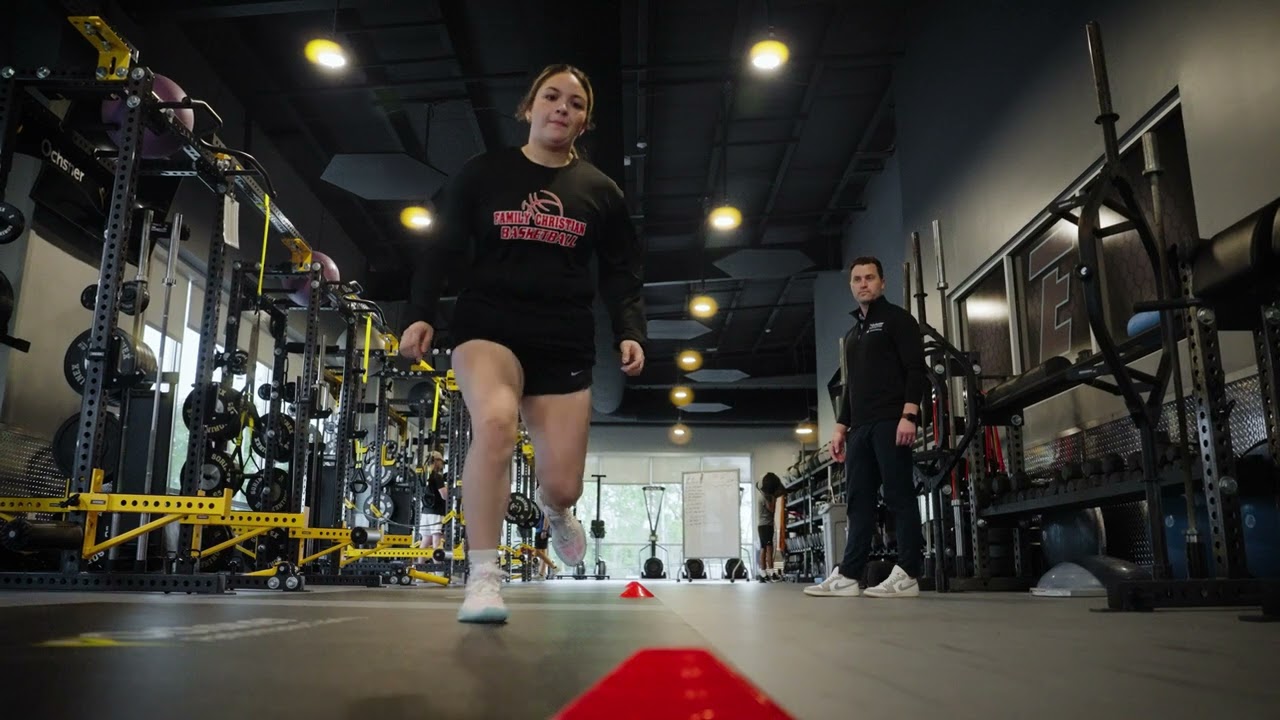
After surgery, Alexis began her rehabilitation at the ACL Center of Excellence, led by Luke Bunch, DPT, at the Elite Training Complex in Baton Rouge. The program follows a criteria-based progression rather than a fixed calendar. Athletes advance through each phase only when they meet specific strength and functional benchmarks, not simply because a certain number of weeks have passed.
ACL recovery demands patience. There are stretches when progress feels invisible. Alexis was honest about the challenge, but she showed up every day, stayed consistent, and trusted the rehabilitation team to guide the process. That consistency is what separates athletes who return to full competition from those who plateau.
The final phase of the return-to-sport process included progressive agility drills, sport-specific movement training, and objective testing to confirm that Alexis was ready to compete at full intensity. She was cleared based on strength, movement quality, and confidence.
In Her Own Words
When asked about her experience, Alexis did not hesitate: “I would 100% recommend Dr. Burnham and his team to anyone that is going through a similar situation as mine.”
She described the trust she felt from the beginning of the process: “Dr. Burnham was super informative from the very beginning. He let me know what exact steps I needed to take in order to recover back. He was just very, very confident and he knew what he was talking about, and I just knew that I could trust him from the very beginning.”
What stood out most to Alexis was something beyond the clinical expertise: “They care about their patients. And that was really, really evident in my rehab process and what I went through. They cared for me not so much as just another patient or another number, but as a person.”
“They cared for me not so much as just another patient or another number, but as a person.”
Alexis Rodriguez, Basketball, Family Christian High School
The Bottom Line
Alexis Rodriguez tore her ACL on a fast break layup. Two years later, she is back on the basketball court. Her story illustrates what is possible when the right surgical approach, a structured rehabilitation program, and a dedicated athlete come together. The work was hard, the timeline was long, and the discipline was daily. Alexis earned every step of this comeback.
If you or your athlete is dealing with an ACL injury in Baton Rouge, Louisiana, contact Dr. Burnham and the team at Ochsner-Andrews Sports Medicine Institute to start building a return-to-play plan.
About the Author
Jeremy M. Burnham, MD is a board-certified orthopedic surgeon and fellowship-trained sports medicine specialist at Ochsner-Andrews Sports Medicine Institute in Baton Rouge, Louisiana. Following his orthopedic surgery residency at the University of Kentucky, he completed his sports medicine fellowship at the University of Pittsburgh Medical Center (UPMC), where he trained under the late Dr. Freddie Fu, a pioneer of anatomic ACL reconstruction, Dr. James Bradley, a renowned sports medicine surgeon and longtime professional team orthopedist, and Dr. Volker Musahl, an internationally recognized ACL surgeon and researcher. His team physician experience spans professional sports teams, the University of Pittsburgh, and Southern University. With 127 peer-reviewed publications, book chapters, and scientific presentations, Dr. Burnham is the most published ACL surgeon in Louisiana. His research focuses on advancing ACL reconstruction, optimizing return-to-sport outcomes, and pioneering injury prevention, and has been recognized with the Game Changer Award from the Arthritis Foundation and the Playmaker Award from AOSSM. He serves as a site principal investigator for two federally funded clinical trials (NIH STABILITY 2 and Department of Defense STaR Trial). View full credentials and publications.
Frequently Asked Questions
How long does it take to return to basketball after ACL reconstruction?
Most athletes return to competitive basketball between nine and twelve months after ACL reconstruction, though the exact timeline depends on meeting specific strength and functional benchmarks rather than a fixed calendar. The ACL Center of Excellence at Ochsner-Andrews Sports Medicine Institute uses a criteria-based progression that clears athletes when they are objectively ready, not simply when a certain number of months have passed.
What is a quadriceps tendon autograft for ACL surgery?
A quadriceps tendon autograft uses a strip of tendon harvested from the patient’s own quadriceps (the large muscle above the kneecap) to reconstruct the torn ACL. It has become a preferred graft choice for many sports medicine surgeons because of its strong fixation properties, reliable healing, and favorable donor-site recovery. Using the patient’s own tissue eliminates the risk of graft rejection associated with donor tissue.
Why are female basketball players at higher risk for ACL tears?
Female athletes face two to eight times the ACL injury risk compared to males in comparable sports. Contributing factors include differences in neuromuscular control, landing mechanics, hormonal influences on ligament laxity, and anatomic variations such as a narrower femoral notch. Injury prevention programs that focus on proper landing technique, hip and core strengthening, and neuromuscular training have been shown to significantly reduce ACL injury rates in female athletes.
What does ACL rehabilitation look like for a young athlete?
ACL rehabilitation progresses through structured phases that build from restoring range of motion and reducing swelling, to strengthening the quadriceps and hamstrings, to sport-specific agility and plyometric training. At the ACL Center of Excellence, athletes work with a physical therapist through each phase and advance based on objective measures of strength, stability, and movement quality. The final clearance for return to sport includes functional testing and a comprehensive assessment of readiness.
Can athletes fully recover and return to their sport after an ACL tear?
Yes. With the right surgical technique, a structured rehabilitation program, and consistent effort, the majority of young athletes return to their pre-injury level of competition after ACL reconstruction. Research shows that athletes who complete a comprehensive return-to-sport program with objective clearance criteria have better outcomes and lower re-injury rates than those who return based on time alone.